



What's Happening?
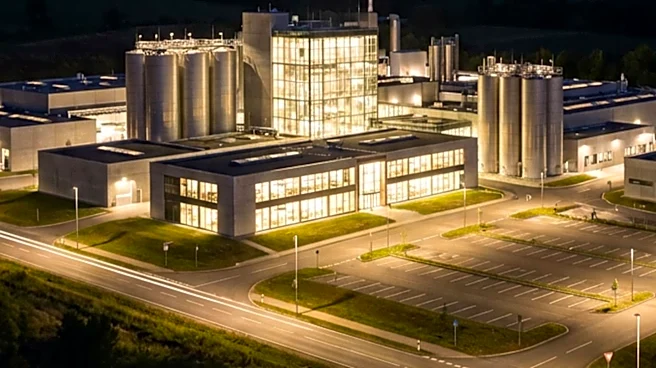
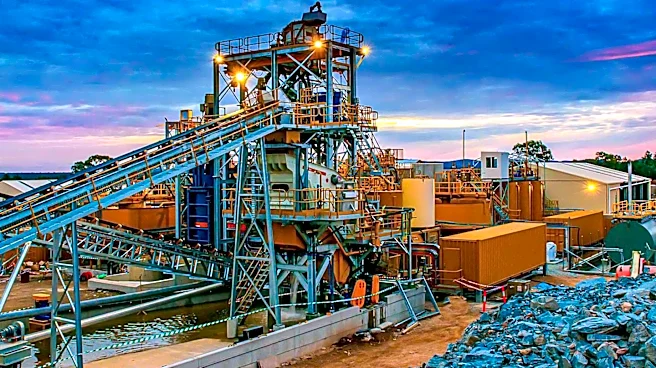
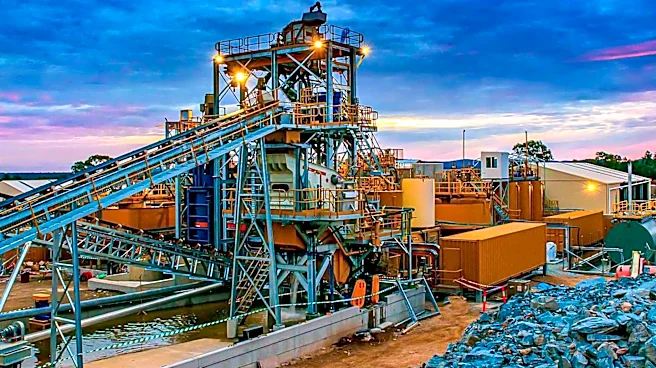
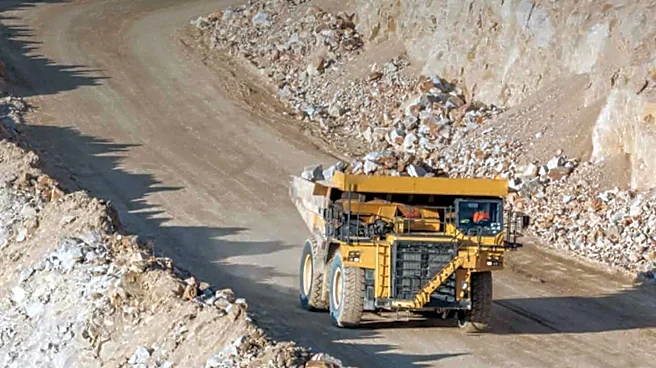
Swedish iron-ore producer LKAB has commenced operational testing at its €73 million demonstration plant in Luleå, Sweden. This facility is designed to recover rare earths and phosphorus from mining residues generated by LKAB’s iron-ore operations at Malmberget.
The project aims to extract all 17 rare-earth elements, along with phosphorus, from existing waste materials, moving from construction into commissioning on schedule and within budget. Routine demonstration operations are targeted for spring 2027, contingent on successful commissioning. This initiative represents a significant step towards creating value from mining residues, offering a method to produce strategic minerals without relying solely on new greenfield mines. The rare-earth oxides and phosphorus products could eventually supply European magnet, fertilizer, and industrial supply chains.
Why It's Important?
This development is strategically important for Europe, and by extension, for global supply chain diversification, including for the U.S. The project aims to reduce Europe's dependence on external sources for critical minerals, particularly from China, which currently dominates the rare earth market. By recovering these elements from mining residues, LKAB is pioneering a more sustainable and integrated approach to mineral production. This method leverages existing infrastructure and mining expertise, potentially reducing geological risk and improving environmental performance compared to traditional mining. For the U.S., a diversified global supply of rare earths means greater stability and reduced vulnerability to geopolitical disruptions, indirectly benefiting American industries that rely on these materials for defense, technology, and renewable energy sectors.
What's Next?
The immediate next step for LKAB is the successful completion of the commissioning and operational testing phase, with routine demonstration operations planned for spring 2027. The demonstration plant must prove the commercial viability of recovering rare-earth and phosphorus products at acceptable yields, purity, and cost. If successful, LKAB plans to develop a larger industrial park capable of full-scale production of rare-earth oxides, phosphorus products, and gypsum, which would require further investment decisions and regulatory approvals. The project also faces ongoing regulatory complexities, particularly regarding related permits in Gällivare. The results of this testing phase will be crucial in determining the feasibility of a full-scale investment and its potential impact on European and global critical mineral supply chains.
Beyond the Headlines
LKAB's project signifies a broader shift towards circular economy principles in the mining industry, where waste materials are re-purposed to extract valuable resources. This approach not only addresses the scarcity of critical minerals but also mitigates environmental impacts associated with traditional mining and waste disposal. The initiative highlights the strategic importance of industrial integration, where existing operations are optimized to yield additional strategic outputs. This model could serve as a blueprint for other regions, including the U.S., seeking to enhance their critical mineral independence and sustainability. The project also underscores the ongoing geopolitical competition for control over critical mineral supply chains, emphasizing the need for innovation and diversification to ensure economic and national security.