





What's Happening?
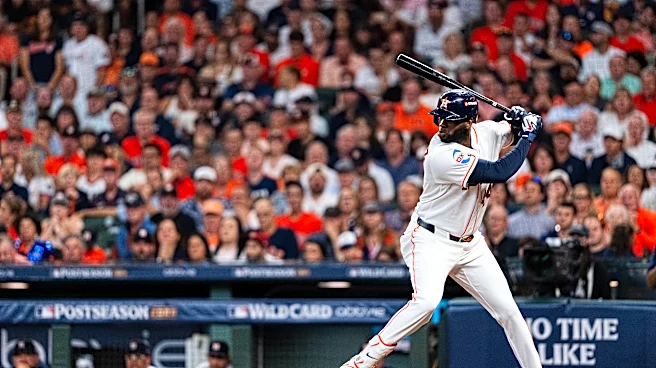
Houston Astros owner Jim Crane has publicly stated his opposition to a complete rebuild of the team, despite the recent appointment of Randy Flores as the new General Manager. According to a press conference, Crane emphasized that he does not envision
a 'complete teardown' of the roster. Instead, he expects Flores to implement 'targeted changes' aimed at solidifying a better lineup and improving the team's overall performance. This directive from the owner indicates a strategic approach focused on incremental enhancements rather than a wholesale overhaul, suggesting a belief in the core strength of the current team with specific areas needing reinforcement. The decision comes as the team looks to move forward under new leadership, with Flores reportedly having total authority in his new role, albeit within the owner's broader vision for the team's direction.
Why It's Important?
Jim Crane's stance against a full rebuild carries significant implications for the Houston Astros and the broader Major League Baseball landscape. For the Astros, it means a continued focus on competitive play in the immediate future, potentially avoiding the multi-year downturn often associated with rebuilding phases. This approach could impact player acquisitions, as the team will likely target established talent or high-impact prospects ready to contribute quickly, rather than focusing solely on long-term development. For fans, it signals a commitment to winning now, which could maintain engagement and attendance. Economically, avoiding a rebuild means sustained investment in player salaries and potentially higher revenue from continued competitiveness. However, it also places pressure on GM Randy Flores to make effective 'targeted changes' that yield immediate results, as a failure to improve could lead to questions about the team's strategy and leadership.
What's Next?
Following Jim Crane's directive, the immediate focus for General Manager Randy Flores will be to identify and execute the 'targeted changes' necessary to improve the Astros' lineup and overall team. This will likely involve strategic moves in the upcoming free agency period and trade market, as Flores seeks to acquire players who can make an immediate impact without dismantling the existing roster. The team will need to balance the owner's mandate for competitiveness with the need for sustainable long-term success. Flores's ability to navigate these expectations and deliver tangible improvements will be closely watched by fans and analysts. The success or failure of these targeted changes will determine the Astros' trajectory in the coming seasons and could influence future decisions regarding the team's strategic direction.
Beyond the Headlines
The decision by Jim Crane to eschew a full rebuild highlights a common tension in professional sports between short-term competitiveness and long-term sustainability. While a rebuild can be painful for fans and financially challenging in the short run, it often lays the groundwork for sustained success. Crane's approach, prioritizing 'targeted changes,' suggests a belief that the Astros are close to championship contention and only require specific adjustments. This strategy, if successful, could serve as a model for other teams looking to avoid prolonged periods of non-competitiveness. However, if the targeted changes fail to produce the desired results, the team could find itself in a difficult position, having neither fully committed to a rebuild nor achieved its competitive goals, potentially leading to more drastic measures down the line. The ethical dimension involves the balance between fan expectations for immediate success and the organizational responsibility for long-term health.