
What's Happening?
A recent survey by the Institute for Supply Management (ISM) indicates that the U.S. manufacturing sector is experiencing its fastest growth in over four years, with a PMI reading of 55.6. Despite this
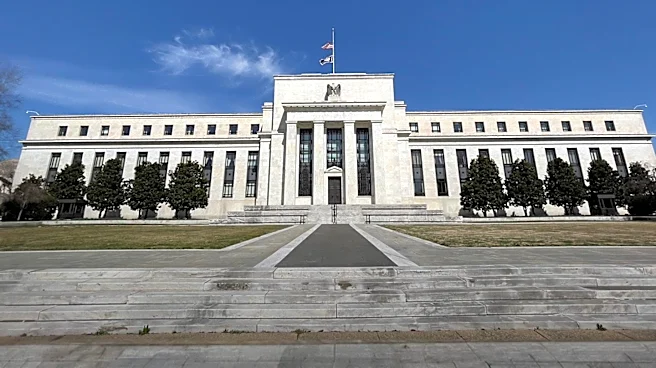
growth, inflationary pressures remain a significant concern, with nearly three-quarters of respondents reporting rising prices. The geopolitical uncertainty, particularly the ongoing conflict in the Middle East, is exacerbating these pressures. The Federal Reserve is under pressure to consider an interest rate hike in response to these inflationary trends, with the next decision expected in September. Analysts suggest that the strong economic performance and persistent inflation could lead to a rate increase.
Why It's Important?
The manufacturing sector's growth is a positive sign for the U.S. economy, but the persistent inflationary pressures pose a challenge for the Federal Reserve. The central bank's decisions on interest rates will have significant implications for economic stability and growth. A rate hike could help curb inflation but may also impact borrowing costs and consumer spending. The manufacturing sector's performance will be closely watched as an indicator of broader economic trends and the effectiveness of monetary policy.
What's Next?
The Federal Reserve will continue to assess economic indicators and inflationary pressures to determine the appropriate monetary policy. The upcoming Federal Open Market Committee meeting in September will be crucial in deciding whether to raise interest rates. The manufacturing sector's ability to sustain growth amid these challenges will be a key factor in future economic policies. Businesses and consumers will need to adapt to potential changes in interest rates and economic conditions.