


What's Happening?
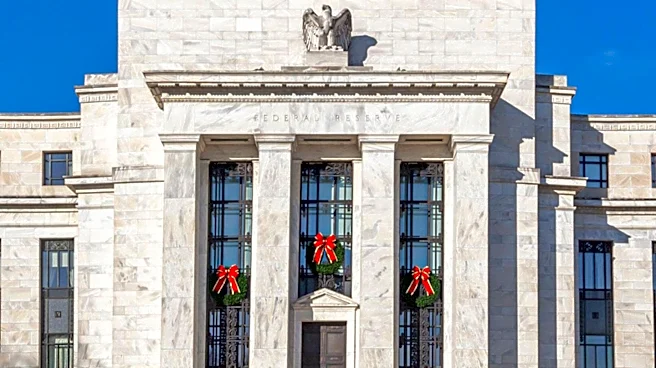
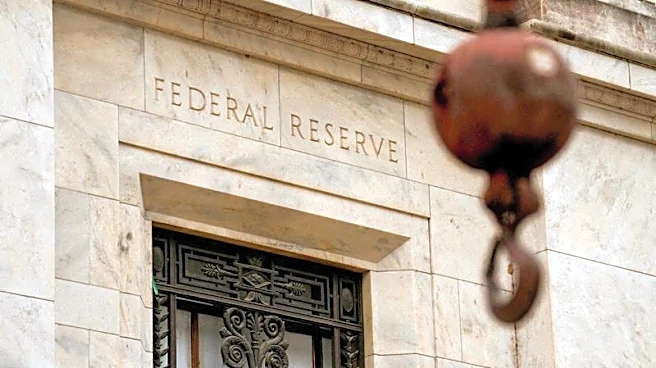
The Federal Reserve is increasingly likely to raise interest rates in December 2026, with futures markets indicating a 75%-80% probability of a quarter-percentage-point hike. This expectation follows a stronger-than-anticipated October jobs report, which
showed the U.S. economy adding 165,000 jobs, significantly exceeding economists' forecasts of 65,000. The unemployment rate also decreased to 4.1%. These robust labor market figures provide the Fed with greater flexibility to prioritize combating inflation, which remained elevated at 3.7% annually in September. San Francisco Fed President Mary Daly and St. Louis Fed President Alberto Musalem have both emphasized the importance of restoring price stability, with Daly stating that stronger employment conditions allow policymakers to focus on inflation. The upcoming Consumer Price Index (CPI) report on November 10 is expected to be a critical factor in solidifying or altering these rate hike expectations.
Why It's Important?
A December rate hike by the Federal Reserve would signal the central bank's continued commitment to taming inflation, even at the risk of potentially slowing economic growth. Higher borrowing costs could impact various sectors of the U.S. economy, particularly technology companies that rely on expensive financing for infrastructure development, such as AI. Mortgage rates, which are already above 7%, are also likely to remain elevated, affecting housing affordability and the real estate market. Consumers could face increased costs for loans and credit, potentially dampening spending. Conversely, a rate hike could benefit savers through higher returns on deposits. The Fed's decision reflects a delicate balancing act between controlling inflation and maintaining a healthy labor market, with implications for investor confidence and overall economic stability.
What's Next?
The immediate next step is the release of the U.S. Consumer Price Index (CPI) report on November 10. A hotter-than-expected inflation reading would likely reinforce the case for a December rate hike, pushing market probabilities even higher. Conversely, softer price growth could temper expectations for an immediate increase, though a single report is unlikely to dictate policy entirely. Following the CPI data, market participants will closely monitor statements from Fed officials, including Chair Jerome Powell, for any indications of a more hawkish or dovish stance. The Federal Open Market Committee's (FOMC) projections will also be scrutinized for insights into potential future rate adjustments in 2026. The December 8-9 FOMC meeting will be the focal point for the official decision on interest rates.
Beyond the Headlines
The Federal Reserve's persistent focus on inflation, even amidst a strong labor market, highlights a broader economic challenge: the difficulty of achieving a 'soft landing' where inflation is controlled without triggering a recession. The current environment suggests that the Fed is prioritizing price stability, potentially accepting some economic slowdown as a trade-off. This approach could lead to a prolonged period of higher interest rates, impacting long-term investment decisions and capital allocation across industries. The debate over whether current inflation is primarily demand-driven or supply-side constrained also continues to influence policy discussions. Furthermore, the resilience of the labor market, despite previous rate hikes, suggests underlying strength in the U.S. economy, but also indicates that inflationary pressures may be more entrenched than initially anticipated, requiring more aggressive monetary policy interventions.