





What's Happening?
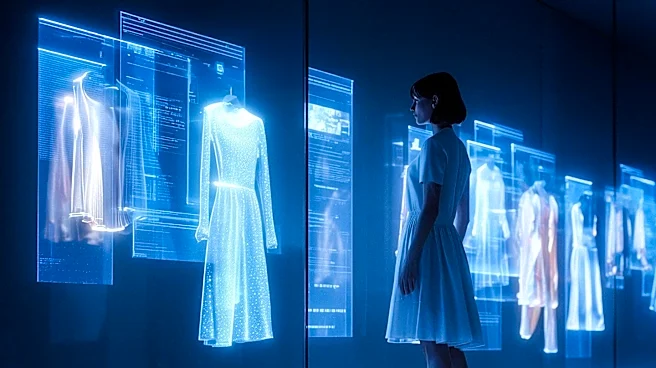
A study published in the journal Fashion and Textiles by researchers Shin Young Jang and Jisoo Ha reveals that dynamic visual modifications in smart clothing negatively impact consumer adoption intentions. The research distinguishes between 'function-oriented'
smart clothing, which integrates technology for utilities like physiological tracking while maintaining a stable appearance, and 'expression-oriented' smart clothing, which visibly alters its appearance through color transitions or pattern shifts. The investigation found that while dynamic features enhanced aesthetic appreciation, they significantly reduced perceived usefulness, leading to a net negative effect on consumers' behavioral intention to use such garments. This counterintuitive outcome suggests a psychological conflict where visual dynamism is perceived as ornamental rather than practical innovation when its utility is not clearly defined.
Why It's Important?
This research is crucial for the burgeoning smart clothing industry, particularly in the U.S. market, where technological innovation often drives consumer interest. The findings highlight a significant hurdle for manufacturers and designers: the need to balance aesthetic appeal with clear functional credibility. If consumers perceive visually transformative smart clothing as merely novelties without practical benefits, market penetration will remain limited. This could impact investment in expressive smart textile technologies and shift focus back to function-oriented designs. Companies aiming to introduce visually dynamic smart apparel must prioritize communicating the utilitarian purpose behind these changes to overcome consumer skepticism and foster adoption. Failure to do so could lead to significant financial losses and hinder the growth of a potentially revolutionary segment of the fashion and technology industries.
What's Next?
The study suggests that future investigations should explore the qualitative boundaries between purposeful aesthetic functions and superficial embellishments. This implies a need for textile engineers and fashion designers to collaborate more closely to develop responsive garments that effectively balance visual spectacle with dependable, transparent utility. For the industry, this means a potential re-evaluation of design strategies, focusing on integrating dynamic visual elements that clearly serve a functional purpose or enhance user experience in a practical way. Consumer education campaigns may also become necessary to articulate the benefits of visually changing garments. Without addressing the perceived lack of usefulness, the market for expression-oriented smart clothing may struggle to move beyond niche appeal, impacting product development cycles and commercialization efforts.
Beyond the Headlines
The study's findings touch upon deeper psychological aspects of consumer behavior, particularly the interplay between aesthetics and utility in technology adoption. It suggests that for certain product categories, especially those involving personal expression like clothing, visual appeal alone is insufficient to drive adoption if it compromises perceived functionality. This could have broader implications for other wearable technologies or products where design innovation might inadvertently obscure practical value. The research also highlights the cultural context of technology adoption, as the study was conducted with South Korean women, a demographic identified as primary for design-led expressive fashion technologies. Understanding these cultural nuances will be vital for global market strategies, as consumer perceptions of 'usefulness' and 'aesthetics' can vary significantly across different regions and demographics.