






What's Happening?
Chinese companies are increasingly utilizing artificial intelligence (AI) and advanced manufacturing to expand their global presence, according to a report released during the 9th China International Import Expo in Shanghai. High-tech products have become
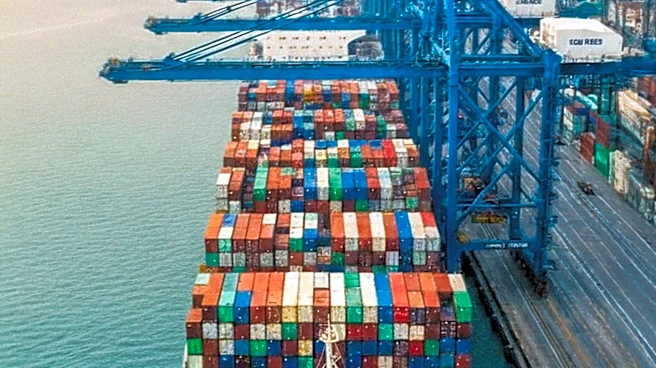
a significant driver of China's export growth, with their export value increasing by 39 percent year-on-year to 3.26 trillion yuan ($490 billion) in the first half of 2026. The report highlights that AI's deeper integration into various industries is accelerating intelligent transformation in advanced manufacturing and technology, thereby promoting China's technology-intensive industries worldwide. This shift signifies a move beyond simply exporting products, with companies now focusing on integrating into local industrial ecosystems through overseas mergers and acquisitions, greenfield investment, and local production. New models like technology licensing and cooperation are also emerging as key strategies for global expansion.
Why It's Important?
This trend is important as it indicates a strategic evolution in how Chinese companies engage with the global market, moving towards more sophisticated and integrated approaches. The emphasis on AI and advanced manufacturing positions China as a significant player in high-tech sectors, potentially increasing competition for U.S. companies in these areas. The growing global competitiveness of Chinese firms in advanced manufacturing, green energy, and digital technology could lead to shifts in global supply chains and market dynamics. Furthermore, the increased investment in AI is driving up electricity demand, which in turn boosts the need for renewable energy, energy storage, power equipment, and energy management technologies. This creates opportunities and challenges for U.S. companies involved in these sectors, as they may face both increased competition and potential collaboration opportunities with Chinese counterparts.
What's Next?
The continued globalization of Chinese companies, driven by AI and advanced manufacturing, is expected to intensify. This will likely lead to more overseas mergers and acquisitions, greenfield investments, and local production initiatives by Chinese firms. The report suggests that China's new energy industry will play a larger role in the overseas energy transition, indicating potential for increased Chinese investment and influence in global renewable energy markets. For U.S. industries, this means a need to adapt to a more competitive global landscape, particularly in high-tech and green energy sectors. Companies may need to innovate further, seek strategic partnerships, or adjust their market strategies to contend with the evolving global presence of Chinese enterprises. The focus on integrating into local industrial ecosystems also suggests a more nuanced and long-term approach to market penetration by Chinese firms.
Beyond the Headlines
The shift in Chinese companies' globalization strategy, from product export to deep integration within local industrial ecosystems, carries broader implications. This approach could foster greater technological interdependence and potentially lead to a more complex global economic landscape. The emphasis on AI and advanced manufacturing also raises questions about intellectual property protection and technology transfer, particularly in sensitive sectors. As Chinese companies expand their footprint, there could be increased scrutiny from various governments regarding market access, fair competition, and national security concerns. The report's mention of China's overseas direct investment hitting a record high in 2025, ranking among the world's top three for nine consecutive years, underscores a sustained and growing capability to build a global presence, which could reshape international trade relations and technological leadership in the coming years.