









What's Happening?
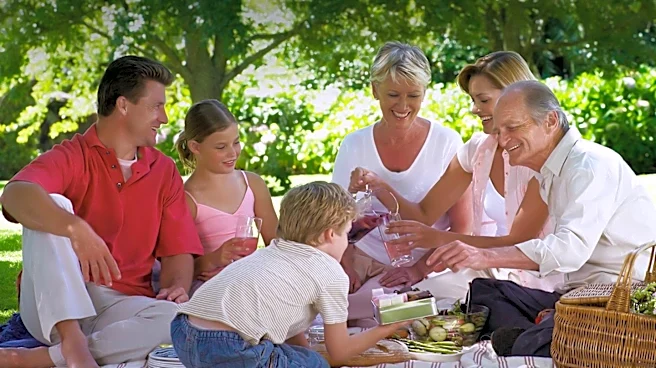
Justin Murphy, co-owner of the real estate brokerage Multi Gen Living Group, shared his family's experience of living in a multigenerational home in Orlando, Florida. In 2023, Murphy and his wife invited his aging parents to move in with them to provide
support and proximity as his father's health began to decline. The family lived in a home designed with an in-law suite, allowing for privacy while maintaining close family ties. This arrangement enabled Murphy's father to spend his final months surrounded by family, enhancing his quality of life. After his father's passing, Murphy's mother continued to live with them, highlighting the emotional and financial benefits of such living arrangements.
Why It's Important?
The story underscores a growing trend in the U.S. where families are opting for multigenerational living arrangements. This setup offers significant financial advantages by sharing household expenses such as groceries, utilities, and property taxes, which can save families thousands of dollars annually. Additionally, it fosters stronger familial bonds and provides emotional support, especially for children who benefit from closer relationships with their grandparents. As housing costs rise and the population ages, more families may consider this model as a viable solution to economic and caregiving challenges.
What's Next?
The trend of multigenerational living is likely to continue as more families recognize its benefits. Real estate developers may increasingly offer homes with flexible floor plans to accommodate such arrangements. Policymakers might also consider incentives or support for multigenerational housing to address housing affordability and elder care needs. As societal norms evolve, this living model could become more mainstream, influencing housing markets and family dynamics across the country.
Beyond the Headlines
Multigenerational living raises important cultural and social considerations. It challenges traditional notions of independence and privacy, requiring families to navigate complex interpersonal dynamics. However, it also offers a solution to the isolation often experienced by the elderly and can enhance community cohesion. As more families adopt this lifestyle, it may lead to broader societal shifts in how Americans view family roles and responsibilities.