





What's Happening?
Seventeen years ago, Renault's decision to fire Nelson Piquet Jr. led to the infamous Crashgate scandal in Formula 1. Piquet Jr., son of three-time F1 champion Nelson Piquet, had a challenging tenure with Renault, culminating in his dismissal after a series
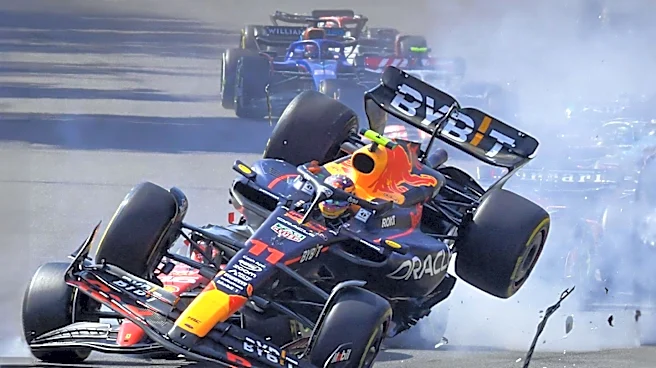
of poor performances. Following his departure, Piquet Jr. accused his former team boss, Flavio Briatore, of intimidation and revealed that he had been instructed to deliberately crash during the 2008 Singapore Grand Prix. This crash was intended to benefit his teammate Fernando Alonso by triggering a safety car. The allegations led to a major investigation by the FIA, resulting in significant repercussions for those involved.
Why It's Important?
The Crashgate scandal remains one of the most controversial episodes in F1 history, highlighting issues of ethics and integrity in the sport. The incident exposed the lengths to which teams might go to gain a competitive advantage, raising questions about the pressures faced by drivers and the ethical boundaries of team strategies. The fallout from the scandal had lasting impacts on the careers of those involved and led to increased scrutiny and regulatory changes within F1. It serves as a cautionary tale about the potential consequences of unethical behavior in high-stakes environments, influencing how teams and drivers approach competition.
Beyond the Headlines
The Crashgate scandal also had broader implications for the governance and oversight of Formula 1. It prompted the FIA to implement stricter regulations and oversight mechanisms to prevent similar incidents in the future. The scandal highlighted the need for transparency and accountability in the sport, leading to reforms aimed at ensuring fair play and maintaining the integrity of competition. Additionally, it sparked discussions about the role of team orders and the ethical responsibilities of team management, influencing the culture and practices within F1 teams.