



What's Happening?
Bare-knuckle boxing (BKB) champion Rolando Dy, who also has a background in UFC and MMA, has offered his perspective on which UFC fighters could successfully transition to bare-knuckle boxing. Dy specifically highlighted Justin Gaethje as a fighter who would
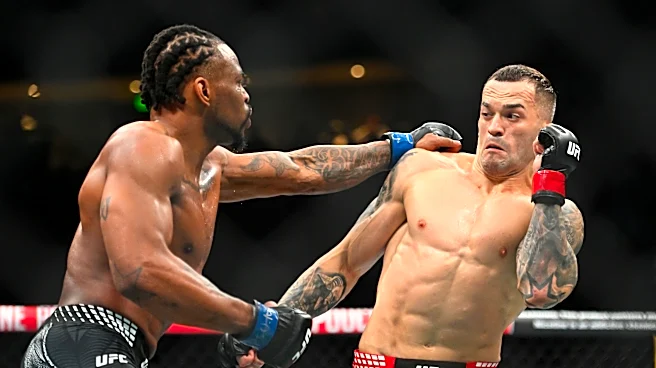
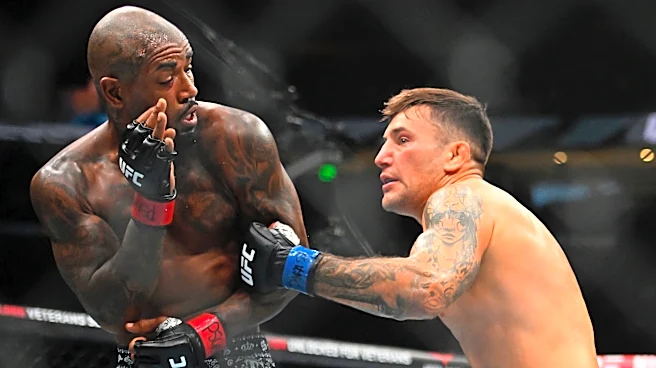
thrive in BKB due to his 'dirty boxing' style, which includes effective clinching and head movement. In contrast, Dy suggested that Ilia Topuria, despite his boxing skills, would need to adjust to the nuances of dirty boxing in a bare-knuckle setting. Dy believes that MMA fighters, generally, possess a physical advantage over traditional boxers in BKB because of their experience with clinching, physical endurance, and ability to fight in close quarters, which are crucial in the BKB 'Mighty Trigon' ring. He noted that while boxers excel in timing and power punching, MMA fighters' physicality and understanding of grappling in a stand-up context give them an edge in bare-knuckle combat.
Why It's Important?
This assessment from a seasoned bare-knuckle and MMA fighter like Rolando Dy is important for several reasons. It provides insight into the evolving landscape of combat sports, particularly the increasing crossover appeal and potential for UFC fighters in bare-knuckle boxing. Dy's analysis underscores the distinct skill sets required for success in BKB, emphasizing physicality and 'dirty boxing' techniques over pure boxing fundamentals. This could influence how UFC fighters, especially those with a striking-heavy style, consider their career trajectories and potential ventures into other combat sports. For promoters and fans, it highlights the exciting prospect of seeing high-profile MMA athletes compete in BKB, potentially drawing new audiences and increasing the sport's popularity. The discussion also sheds light on the strategic advantages MMA training offers in a bare-knuckle environment, suggesting a broader recognition of MMA's comprehensive combat skills.
What's Next?
The insights provided by Rolando Dy could spark further discussions and potentially encourage more UFC fighters to explore bare-knuckle boxing as a viable career path or a supplementary challenge. If more prominent UFC fighters like Justin Gaethje or Ilia Topuria were to seriously consider BKB, it could lead to significant shifts in the combat sports landscape. This might involve increased cross-promotional events or a greater emphasis on specific training methodologies that blend MMA and bare-knuckle boxing techniques. Dy's upcoming defense of his Police Gazette diamond super welterweight crown at BKB 60 on October 10th will further showcase the sport's appeal and the type of fighting style that succeeds within it. Future developments could include more detailed analyses from other combat sports experts on the specific attributes that make MMA fighters well-suited for bare-knuckle competition, potentially influencing fighter training regimens and strategic career decisions.
Beyond the Headlines
Beyond the immediate implications for fighter careers and combat sports promotions, Dy's comments touch upon a deeper philosophical debate about the 'most effective' fighting style. His argument that MMA fighters have an advantage in bare-knuckle boxing due to their physicality and understanding of clinching challenges the traditional boxing purist's view. This perspective suggests that the raw, less-regulated environment of bare-knuckle fighting might favor a more comprehensive, less specialized combat approach. It also highlights the adaptability of MMA athletes, who are trained to handle a wider range of combat scenarios compared to boxers. This ongoing dialogue could lead to a re-evaluation of what constitutes 'pure' fighting skill and how different combat sports disciplines prepare athletes for various forms of unarmed combat, potentially influencing future training methodologies and the evolution of fighting techniques across different sports.