








What's Happening?
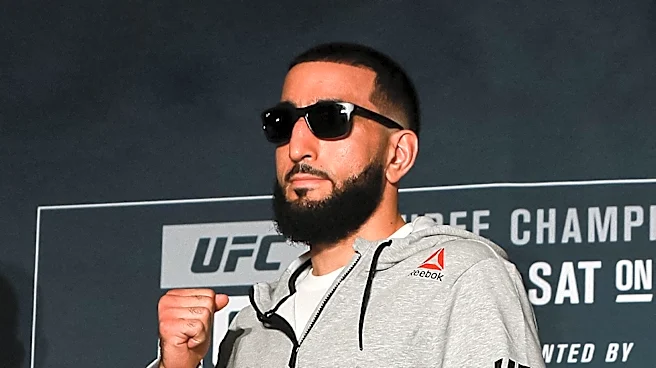
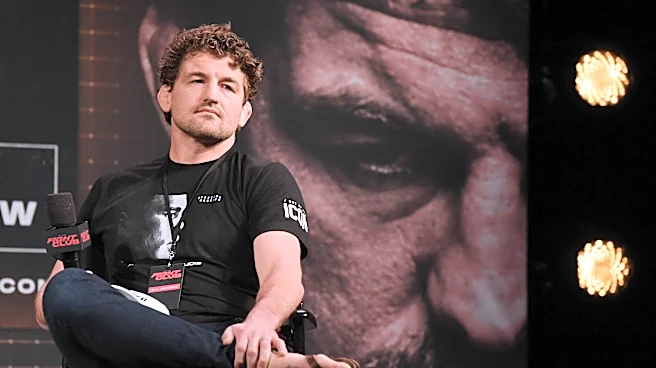
Colby Covington, a prominent figure in RAF Wrestling, has publicly criticized Belal Muhammad following a heated altercation at the RAF 11 post-fight press conference in Milwaukee. The incident occurred after Covington secured a victory over Arman Tsarukyan,
while Muhammad defeated Ben Askren. Tensions escalated when Muhammad interrupted Covington during the press conference, leading to a verbal exchange and a physical altercation where Muhammad allegedly attempted to kick Covington. Covington expressed his frustration, labeling Muhammad as 'unprofessional' and 'embarrassing.' The rivalry between the two fighters has been ongoing, with Muhammad previously accusing Covington of benefiting from 'white privilege' in his career. The altercation has cast doubt on their scheduled match at RAF 12, with Covington considering withdrawing from the fight.
Why It's Important?
The altercation between Covington and Muhammad highlights ongoing tensions in the combat sports community, particularly around issues of professionalism and conduct. Covington's accusations against Muhammad, including claims of racism, underscore the complex dynamics of race and privilege in sports. The incident also raises questions about the management of athlete behavior and the potential impact on event safety and reputation. For RAF Wrestling, maintaining a professional image is crucial for its growth and credibility. The fallout from this incident could influence future matchups and the organization's approach to handling athlete disputes.
What's Next?
Covington has indicated that he may withdraw from the scheduled match against Muhammad at RAF 12, opting instead to face a different opponent. This decision could impact the event's lineup and fan interest. Additionally, Covington has initiated a poll to gauge fan interest in the matchup, suggesting that public opinion may influence the final decision. The outcome of this situation could set a precedent for how RAF Wrestling addresses similar conflicts in the future, potentially leading to stricter conduct policies or changes in promotional strategies.