









What's Happening?
Oil prices fell by 4% following progress in U.S.-Iran talks, which eased concerns over oil supply disruptions. Brent crude prices dropped to $77.39 a barrel, down from $82.30 earlier in the day. The discussions, held in Switzerland, aimed to extend a ceasefire
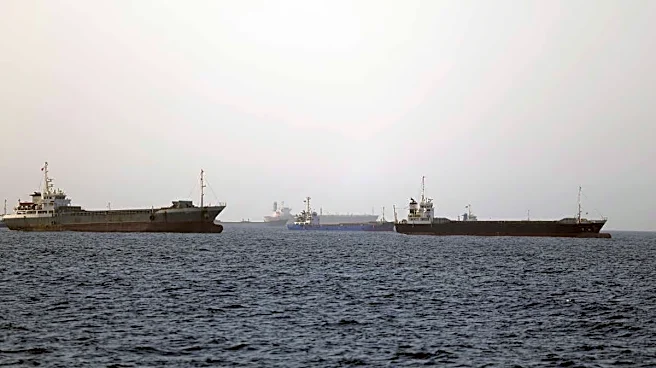
and resulted in the U.S. authorizing Iranian oil sales through August 21. Despite the easing of tensions, Iran did not negotiate on its nuclear program. The reopening of the Strait of Hormuz has allowed for increased oil exports, with two tankers carrying nearly 2 million barrels of oil passing through the strait. The United Arab Emirates, Kuwait, and Iraq have also increased oil offerings to customers, with Iraq planning to restore crude production to over 4 million barrels per day.
Why It's Important?
The easing of supply concerns and the reopening of the Strait of Hormuz are significant for global oil markets, as they reduce the risk of supply disruptions that could lead to price spikes. The authorization of Iranian oil sales marks a shift from previous U.S. policies and could lead to increased oil supply in the market, potentially stabilizing prices. This development is crucial for countries dependent on oil imports, as it may lead to lower energy costs. However, the situation remains delicate, with potential geopolitical implications if talks between the U.S. and Iran do not progress further.
What's Next?
The continuation of talks between the U.S. and Iran could lead to further easing of tensions and stabilization of oil markets. However, the situation remains fluid, with potential for renewed tensions if negotiations stall. The global oil market will closely monitor the outcomes of these talks, as well as the production levels from key oil-producing countries in the Middle East. The U.S. and Iran may need to address broader geopolitical issues, including Iran's nuclear program, to ensure long-term stability in the region.