






What's Happening?
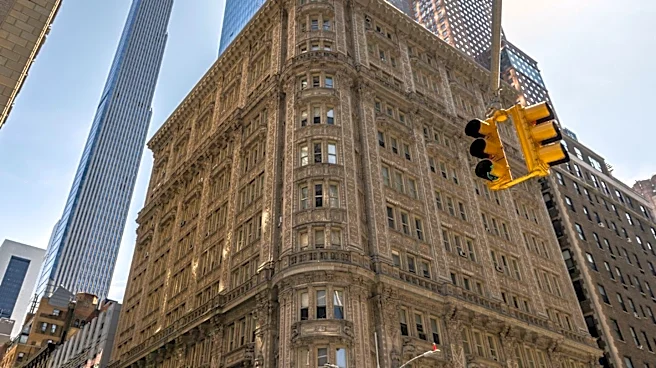
Soros Fund Management, led by George Soros, has listed the landmarked 224 West 57th Street building on Manhattan's Billionaires’ Row for sale, with an expected price of $100 million. This move comes shortly after the fund acquired the property through
a foreclosure auction. The building, also known as the Argonaut building, is being marketed with its potential for conversion into high-end residential apartments. The current office tenants are expected to depart, and the property possesses air rights that could expand its buildable square footage to over 200,000 square feet. This offering highlights a growing trend in Manhattan to transform distressed office spaces into luxury residential units, particularly along 57th Street.
Why It's Important?
This sale is significant for the U.S. real estate market, particularly in New York City, as it underscores the ongoing shift in commercial property utilization. The conversion of office buildings to residential units addresses several market dynamics: the increasing demand for luxury housing in prime locations and the challenges faced by the office sector, exacerbated by changing work patterns. For developers and investors, this presents an opportunity to capitalize on a 'relatively clean path' from distressed commercial assets to high-value residential properties. The success of such conversions could set a precedent for other urban centers grappling with underutilized office spaces, potentially revitalizing urban cores and diversifying housing options, albeit at the high end of the market. It also reflects the strategic investment approach of entities like Soros Fund Management in identifying and leveraging market inefficiencies.
What's Next?
The listing of 224 West 57th Street suggests that Soros Fund Management aims for a quick turnaround on its foreclosure acquisition. The next steps will involve attracting potential buyers, likely developers specializing in luxury residential conversions. The sale process will determine the market's appetite for such large-scale transformations and the valuation of properties with significant conversion potential. If the sale proceeds as anticipated, it could further accelerate the trend of office-to-residential conversions in Manhattan and other major U.S. cities. This could lead to increased competition for similar distressed office assets and potentially influence zoning regulations and urban planning discussions regarding land use and housing supply in dense urban environments. The outcome will be closely watched by real estate investors and urban planners.
Beyond the Headlines
Beyond the immediate transaction, this development points to a broader re-evaluation of urban real estate in the post-pandemic era. The shift from commercial to residential use for a landmarked building on Billionaires' Row highlights the evolving economic landscape and the resilience of the luxury housing market. It also raises questions about the long-term viability of traditional office spaces and the potential for adaptive reuse to address urban housing shortages, albeit primarily for affluent residents. The ethical implications of converting potentially affordable commercial spaces into ultra-luxury residences in a city with significant housing inequality could also become a point of discussion. This trend could reshape urban skylines and neighborhood demographics, influencing local economies and social structures for decades to come.