
What's Happening?
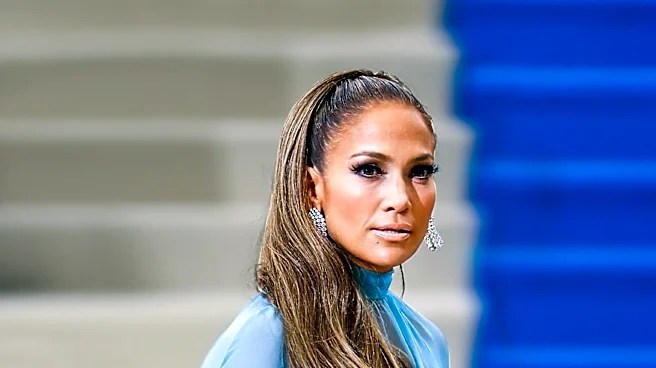
Jennifer Lopez, the acclaimed singer and actress, recently confronted a group of paparazzi in Paris, asking them to 'stop acting crazy' as they followed her through the city. The incident occurred during
Paris Fashion Week, where Lopez has been making several appearances after attending Milan Fashion Week. A video captured the moment she stopped, turned to the photographers, and requested they relax, stating, 'Nobody is running anywhere. We're not doing anything. You can just take your pictures.' This interaction highlights the intense media scrutiny celebrities often face, particularly during high-profile events like fashion weeks. Fans have since taken to social media to commend Lopez for speaking up for herself, while some also commented on her fashion choices during her Paris visit, including a white slip dress paired with black leather loafers.
Why It's Important?
This event underscores the ongoing tension between celebrity privacy and public interest, particularly in the age of pervasive media and social platforms. For public figures like Jennifer Lopez, maintaining a semblance of personal space amidst constant photographic pursuit is a recurring challenge. The incident also brings to light the behavior of paparazzi, who are often criticized for aggressive tactics in their pursuit of celebrity images. The public's reaction, with many supporting Lopez, reflects a growing sentiment that celebrities, despite their public roles, are entitled to a degree of personal boundaries. This dynamic influences how celebrities engage with the media and can shape public perception of both the stars and the media outlets covering them. The fashion industry, heavily reliant on celebrity presence for visibility, also plays a role in attracting such intense media attention.
What's Next?
Following this incident, it is likely that discussions around celebrity privacy and paparazzi ethics will continue, potentially leading to renewed calls for stricter guidelines or self-regulation within the media industry. Celebrities may become more vocal about their experiences, potentially influencing how they interact with the press at future events. For Jennifer Lopez, her presence at Paris Fashion Week will continue to draw attention, and her future public appearances may be observed with a heightened awareness of her interactions with photographers. The incident could also prompt event organizers to review security and media access protocols to better manage the environment around high-profile attendees, aiming to prevent similar confrontations.
Beyond the Headlines
Beyond the immediate confrontation, this event touches upon broader societal implications regarding the commodification of celebrity images and the ethical responsibilities of media. The constant surveillance faced by public figures can lead to significant psychological strain, impacting their well-being and personal lives. This incident also highlights the power dynamics at play, where celebrities, despite their fame, often feel a lack of control over their personal space. The public's engagement with such stories, often through social media, further complicates these dynamics, creating a feedback loop where demand for celebrity content fuels aggressive photographic practices. It raises questions about the balance between a celebrity's right to privacy and the public's perceived right to access their lives, especially in public spaces.