




What's Happening?
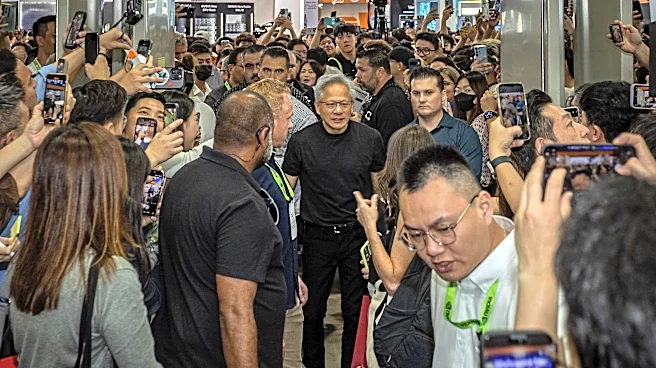
Nvidia has directly communicated with its robotics-related portfolio companies, assuring them of continued investment and normal operations following the departure of founder and former Chief Executive Officer Jensen Huang. Since November 12, Nvidia and its venture
capital arm, NVentures, have contacted at least three startups to address concerns that arose due to the leadership change. Interim CEO Colette Kress, who has a finance background, is perceived by some as potentially less inclined to pursue investment deals as rapidly as Huang, and she reportedly opposed some of his past investment decisions. This outreach aims to alleviate anxieties among companies within Nvidia's robotics ecosystem, an area Huang heavily prioritized, framing it as a significant economic opportunity. Nvidia has invested in over 35 robotics and 'physical AI' companies, with 29 disclosing funding rounds totaling nearly $11 billion. These investments are part of Nvidia's broader strategy to expand its AI ecosystem and secure customers for its simulation tools, software, and chips.
Why It's Important?
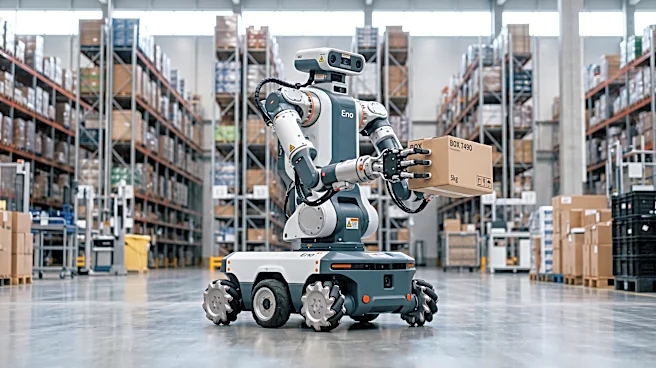
Nvidia's commitment to its robotics investments is crucial for the continued growth and innovation within the 'physical AI' sector. The company's strategy involves not only developing core technologies like chips and software but also fostering an ecosystem through strategic investments in startups. This approach ensures that Nvidia's technology is adopted widely and that it benefits from the growth of these emerging companies. Any perceived slowdown in Nvidia's investment pace could have ripple effects across the robotics industry, potentially impacting the development of humanoid robots, autonomous driving software, and self-driving trucks. The assurance from Nvidia helps maintain stability and confidence among these startups, which often rely heavily on Nvidia's computing infrastructure. Furthermore, Nvidia's robotics products generated $11 billion in revenue in the first half of this year, indicating the significant financial stake the company has in this sector.
What's Next?
Nvidia's vice president of robotics, Deepu Talla, has stated the company's intention to 'continue actively cultivating the ecosystem,' suggesting that the investment policy will remain unchanged despite the leadership transition. This indicates that Nvidia will likely proceed with its two-pillar robotics strategy: developing foundational technologies and investing in startups. The company's continued support is also vital for international collaborations, such as the Cosmos Coalition, an industry alliance built around Nvidia's physical AI platform that includes 22 Japanese companies. These companies, including Fanuc and Honda R&D, are studying coordinated control platforms for physical AI incorporating Nvidia technology, and their development plans are contingent on Nvidia's sustained investment and platform support. Future actions will likely involve continued engagement with portfolio companies and strategic investments to further solidify Nvidia's position in the rapidly evolving robotics and AI landscape.
Beyond the Headlines
The continuity of Nvidia's robotics investment strategy under new leadership highlights the company's long-term vision for AI's application in the physical world. This commitment extends beyond mere financial returns; it's about shaping the future of industries that rely on advanced automation and AI. The strategy also reveals a symbiotic relationship where Nvidia's investments not only provide capital to startups but also ensure a steady stream of customers for its core products. This creates a powerful feedback loop, driving innovation and market dominance. The emphasis on 'physical AI' signifies a broader shift in technological development, moving AI from purely digital realms to tangible, real-world applications. This has profound implications for labor markets, industrial efficiency, and daily life, as robots become more integrated into various sectors, from manufacturing to logistics and personal assistance.