









What's Happening?
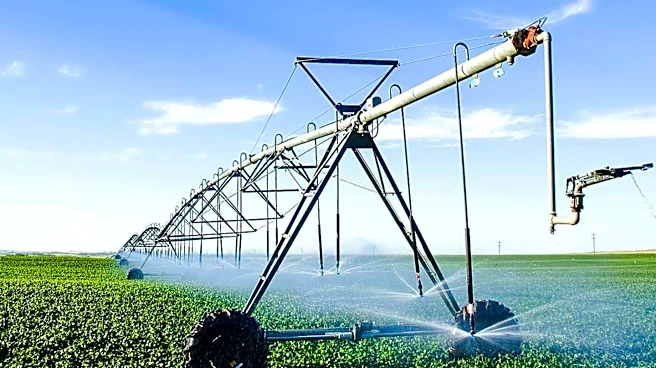
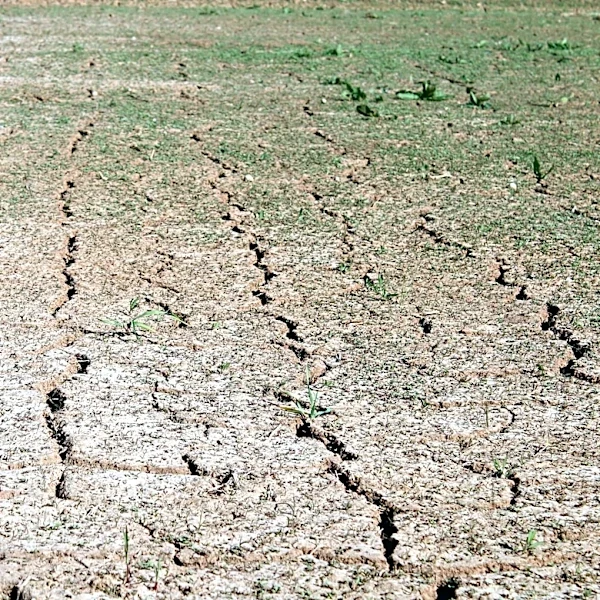
Engage Crop Solutions, a UK-based company, has launched its Aqualatus technology in the U.S. market to tackle water scarcity issues in agriculture. This development comes as water resources in key agricultural regions, such as the Great Plains and parts
of the Western states, are depleting faster than they can be replenished. Aqualatus is designed to enhance water utilization within the soil-plant system, improving root development and nutrient uptake, which leads to more consistent crop yields. The technology is compatible with existing irrigation systems and can be applied without altering standard farming practices. It works by forming a structured network around soil particles, increasing the soil's water-holding capacity and improving moisture availability to plant roots.
Why It's Important?
The introduction of Aqualatus is significant as it addresses the critical issue of water scarcity, which has become a norm due to prolonged drought conditions affecting over 60% of the U.S. This scarcity has led to increased water costs for farmers, putting pressure on yield stability and farm profitability. By improving water-use efficiency, Aqualatus offers a solution that could help farmers maintain productivity and profitability despite challenging environmental conditions. The technology's ability to reduce irrigation water use and increase crop yields presents a potential economic benefit for the agricultural sector, which is crucial for food security and the economy.
What's Next?
As Aqualatus gains traction in the U.S., its adoption could lead to broader changes in agricultural practices, emphasizing sustainable water management. Farmers and agricultural stakeholders may increasingly turn to such technologies to mitigate the impacts of climate change and water scarcity. The success of Aqualatus in field trials, such as the 124-acre winter wheat trial in Washington State, where it increased yields and reduced water use, suggests that similar outcomes could be achieved across various crops and regions. This could prompt further research and development in water management technologies, potentially influencing agricultural policies and practices.