





What's Happening?
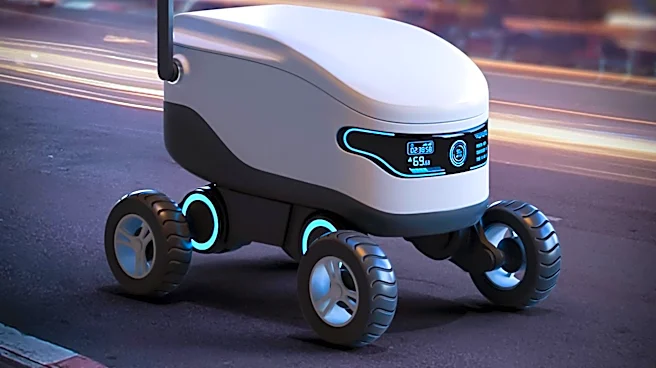
Uber Eats is launching pilot programs for autonomous food delivery in Los Angeles, utilizing both robots and self-driving cars. Serve robots will handle short-range deliveries in West Hollywood, while autonomous vehicles from Motional will manage longer-range
orders in Santa Monica. This initiative is part of Uber Eats' second annual Go/Get product announcement, which also introduced voice ordering for Android users and in-stadium concession ordering via the app. Customers opting into the autonomous delivery service will receive a notification and a code to unlock the robot or car upon arrival to retrieve their food. The company has not yet specified which restaurants are participating or the number of autonomous units involved but intends to scale the technology at its own pace.
Why It's Important?
The pilot programs for autonomous delivery by Uber Eats signify a significant step towards integrating advanced robotics and AI into the food service industry. This move could lead to lower delivery costs and a reduced environmental impact, addressing key challenges faced by food delivery services. For consumers, it introduces a new method of receiving orders, potentially offering increased efficiency and convenience. For the broader industry, it highlights the ongoing shift towards automation in logistics and last-mile delivery, which could reshape employment opportunities for human delivery drivers and alter operational models for restaurants and delivery platforms. The success and expansion of these pilots could set a precedent for wider adoption of autonomous delivery across urban centers in the U.S., influencing investment in robotics and AI technologies.
What's Next?
Uber Eats plans to gradually scale its autonomous delivery operations, indicating a long-term commitment to this technology. The company will likely monitor the performance, efficiency, and customer acceptance of the pilot programs in Los Angeles before expanding to other cities or increasing the number of participating restaurants and autonomous vehicles. Further developments may include refining the technology for various urban environments, addressing regulatory challenges related to autonomous vehicles, and potentially integrating these services with other aspects of Uber's platform. The expansion of in-stadium ordering, currently available in several U.S. sports venues and one international location, suggests a broader strategy to enhance customer experience through technology in diverse settings.
Beyond the Headlines
The introduction of autonomous delivery raises deeper questions about the future of work and the ethical implications of automation. While promising cost savings and environmental benefits, the widespread adoption of delivery robots and self-driving cars could displace human delivery drivers, necessitating discussions around workforce retraining and new economic models. Furthermore, the interaction between autonomous vehicles and urban infrastructure, as well as public perception and trust in these technologies, will be crucial for their long-term success. The data collected from these pilots could also provide valuable insights into consumer behavior and logistical optimization, potentially influencing urban planning and the design of future delivery ecosystems.