



What's Happening?
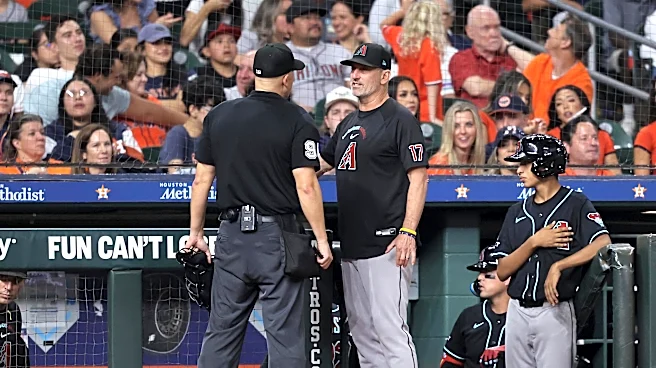
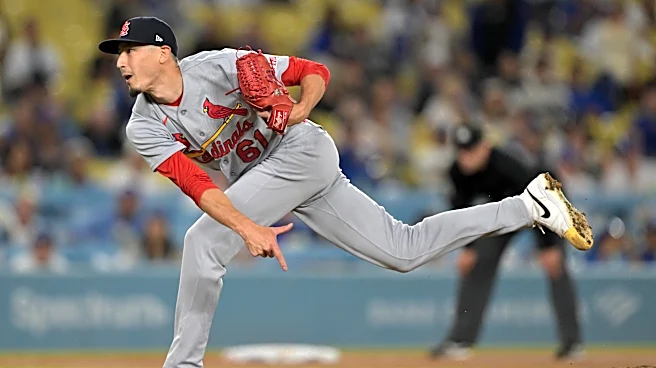
St. Louis Cardinals manager Oliver Marmol was ejected from a game against the Colorado Rockies after arguing with home plate umpire Doug Eddings. The dispute arose when Eddings instructed Cardinals rookie reliever Hancel Rincon to wear his cap straight,
despite Rincon typically wearing it slightly tilted. Marmol defended his player, calling Eddings' directive a 'power-hungry move' and noting that many players have worn their caps tilted without issue. Eddings admitted that there is no specific rule against wearing a cap tilted but claimed it was an 'unwritten rule' and that a batter had complained about it being a distraction. However, Rockies catcher Hunter Goodman, the batter in question, refuted Eddings' claim, stating he never mentioned Rincon's hat. The ejection occurred after Marmol continued to voice his displeasure, and Eddings issued a pitch clock violation to another Cardinals pitcher, Justin Bruihl.
Why It's Important?
This incident highlights ongoing tensions between players, managers, and umpires over the interpretation and enforcement of rules, particularly unwritten ones, in professional baseball. Marmol's ejection and his strong criticism of Eddings underscore concerns about umpire discretion and potential overreach, which can impact game flow and player morale. The controversy also brings into question the role of umpires: whether they should strictly enforce official rules or intervene in matters of player appearance that are not explicitly regulated. Such disputes can erode trust between teams and officiating crews, potentially leading to more confrontations. For rookie players like Rincon, being singled out for a non-rule infraction during their MLB debut can add unnecessary pressure and distraction, affecting their performance and initial experience in the league.
What's Next?
While the immediate game is over, the incident could lead to further review by Major League Baseball. Managers and players can be fined or suspended for public criticism of umpires, though Marmol's comments were directed at Eddings' specific actions rather than a general critique. Eddings' explanation, particularly the disputed claim about the batter's complaint, may also come under scrutiny. This event might prompt MLB to clarify guidelines for umpire conduct regarding player appearance, especially for non-rule-based issues. It also serves as a reminder for umpires to focus on enforcing official rules to avoid unnecessary confrontations and maintain the integrity of the game. The Cardinals will likely move past the incident, but it adds to the ongoing dialogue about umpire accountability and the balance of power on the field.
Beyond the Headlines
This seemingly minor dispute over a cap's tilt touches upon broader themes of authority, tradition, and individual expression within professional sports. Baseball, known for its rich history and unwritten rules, often sees clashes when these informal codes intersect with modern player individuality. The umpire's insistence on a 'straight' cap can be seen as an attempt to uphold a certain traditional aesthetic or decorum, while Marmol's defense of Rincon champions player autonomy and challenges what he perceives as arbitrary authority. This dynamic reflects a larger cultural shift where younger generations of athletes increasingly assert their personal style, sometimes clashing with established norms. The incident also raises questions about the psychological impact of such interventions on players, particularly rookies, and how it might affect their confidence and focus during critical moments in their careers.