





What's Happening?
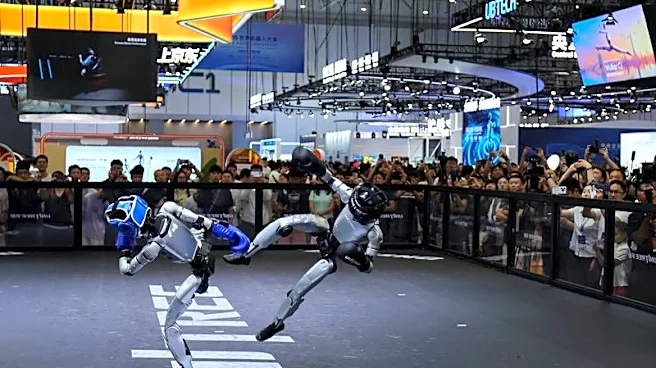
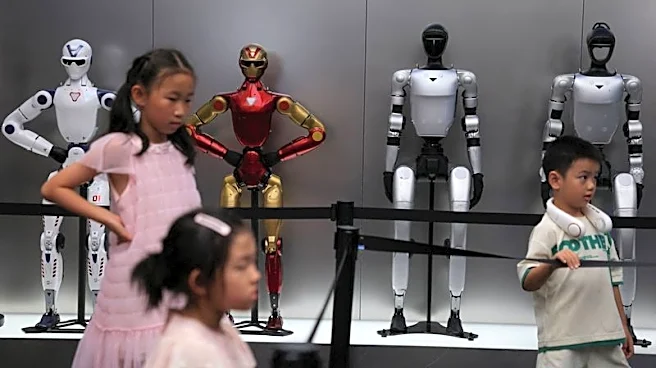
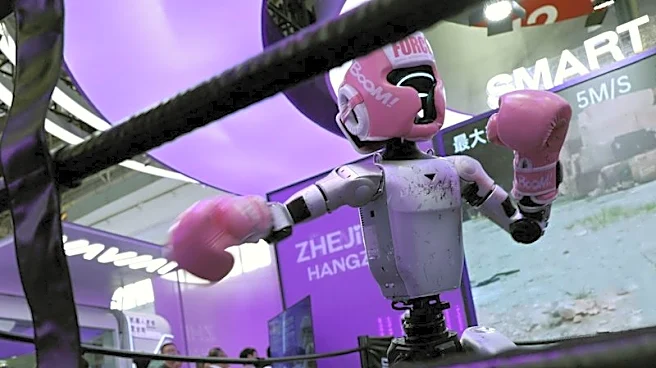
RoboStore, a prominent U.S. distributor of Chinese-made humanoid robots and robot dogs, is pivoting its business strategy to focus on domestic manufacturing. The company, which previously served as the main North American distributor for Unitree Robotics,
a Chinese firm known for affordable and popular robot models, announced plans to open a 66,000-square-foot facility on Long Island, New York, by the first fiscal quarter of 2027. This strategic shift comes in response to the U.S. government's increasing scrutiny and crackdown on foreign-made robots. RoboStore has also launched a new entity, Robo Inc., to manage its new robotics manufacturing and systems integration operations. The company's founder and CEO, Teddy Haggerty, stated that RoboStore had sold over 1,500 robots to various clients, including universities like Harvard and MIT, and tech companies such as Amazon, Nvidia, Cisco, and OpenAI, for research and development purposes.
Why It's Important?
This move by RoboStore highlights the growing impact of U.S. government policies aimed at reducing reliance on foreign technology, particularly from China, within critical sectors. The shift towards domestic manufacturing could bolster the U.S. robotics industry, creating jobs and fostering innovation within the country. For U.S. universities and tech companies that previously relied on affordable Chinese robots for their research, this change might lead to higher costs or a need to adapt to new domestic suppliers. It also underscores a broader trend of reshoring manufacturing and supply chains to enhance national security and economic independence. The development could also influence the competitive landscape of the robotics market, potentially giving an advantage to U.S.-based manufacturers and integrators.
What's Next?
RoboStore's new manufacturing facility, operating under Robo Inc., is expected to be fully operational by the first fiscal quarter of 2027. The company will focus on producing its own commercial robots and providing systems integration services. This transition will likely involve significant investment in infrastructure, talent acquisition, and research and development to create competitive domestic robot models. Other U.S. distributors of foreign-made technology may follow suit, anticipating further government restrictions. The U.S. government may continue to implement policies that encourage domestic production and limit the use of foreign technology in sensitive areas, potentially leading to a more robust, albeit potentially more expensive, domestic robotics ecosystem.
Beyond the Headlines
The pivot by RoboStore reflects a deeper geopolitical and economic tension between the U.S. and China, particularly concerning technological dominance and national security. The U.S. government's concerns about foreign-made robots extend beyond economic competition, encompassing potential risks related to data security, espionage, and control over critical infrastructure. This situation could accelerate the development of a distinct U.S. robotics industry, fostering innovation in areas deemed strategically important. However, it also raises questions about the potential for increased costs for consumers and businesses, and the impact on global scientific collaboration if access to diverse technological solutions becomes more restricted. The long-term implications could include a more fragmented global technology market, with countries increasingly developing their own independent technological ecosystems.