








What's Happening?
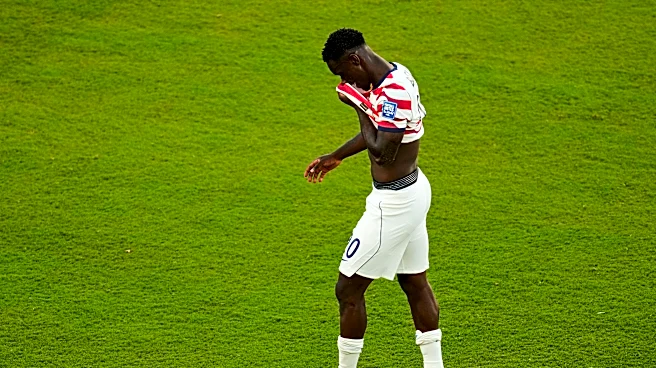
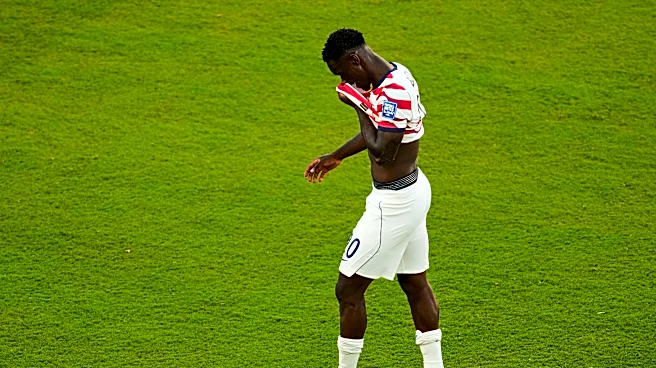
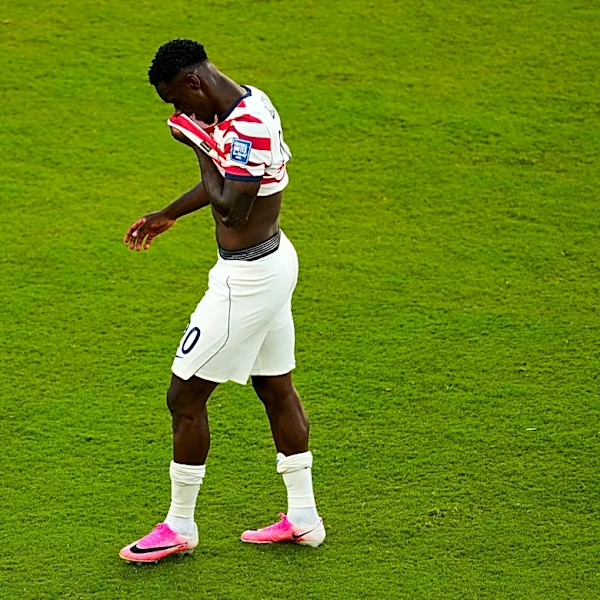
FIFA has suspended the one-game ban of U.S. soccer player Folarin Balogun, allowing him to participate in the upcoming World Cup match against Belgium. Balogun received a controversial red card during the United States' round-of-32 victory over Bosnia
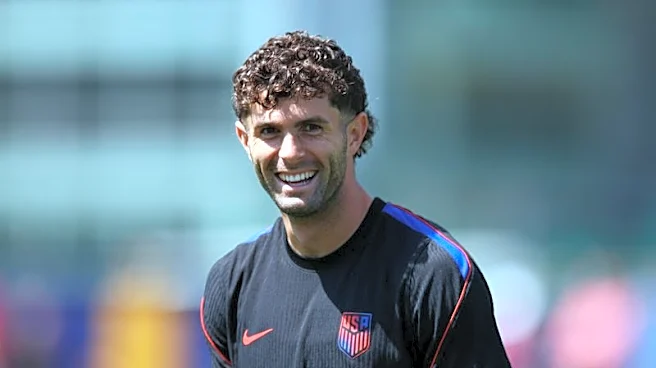
and Herzegovina, which typically results in an automatic one-match suspension. However, FIFA's intervention has lifted this suspension, citing Article 27 of their disciplinary code, which allows for the suspension of disciplinary measures. The decision has been met with surprise and criticism from the Royal Belgian Football Association, which argues that it contradicts FIFA's own rules on red-card suspensions. The U.S. team, including player Christian Pulisic, expressed relief and motivation from the decision, as Balogun has been a key player in the tournament.
Why It's Important?
The suspension of Balogun's ban is significant as it impacts the U.S. team's chances in the World Cup, providing them with a crucial player for their match against Belgium. This decision also highlights the influence of high-level interventions in sports, as President Trump reportedly requested FIFA to review the red card. The move has sparked debate over the consistency and fairness of FIFA's disciplinary actions, potentially affecting the perception of the governing body's integrity. For Belgium, the decision is seen as a challenge to fair play principles, prompting them to explore their options in response. The outcome of this match could have broader implications for the U.S. team's progress in the tournament.
What's Next?
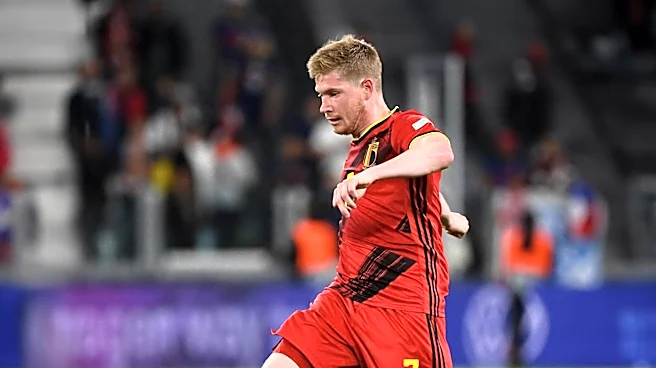
The U.S. will face Belgium in a rematch of their 2014 World Cup encounter, with the added advantage of having Balogun available. The Belgian Football Association is considering its options, which may include formal protests or appeals. The match's outcome could influence future FIFA disciplinary decisions and set a precedent for how similar cases are handled. Stakeholders in international soccer will be closely watching the match and any subsequent actions taken by FIFA or the Belgian association.
Beyond the Headlines
This incident raises questions about the role of political influence in sports governance, as well as the transparency and consistency of FIFA's disciplinary processes. The decision to lift Balogun's ban could lead to increased scrutiny of FIFA's decision-making and its susceptibility to external pressures. It also underscores the importance of fair play and the potential for controversy when rules are perceived to be applied inconsistently.