






What's Happening?
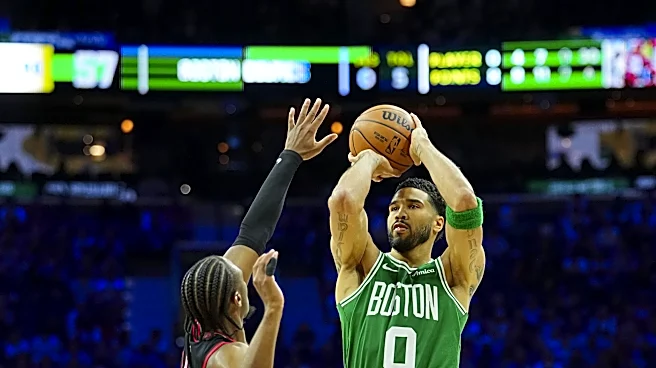
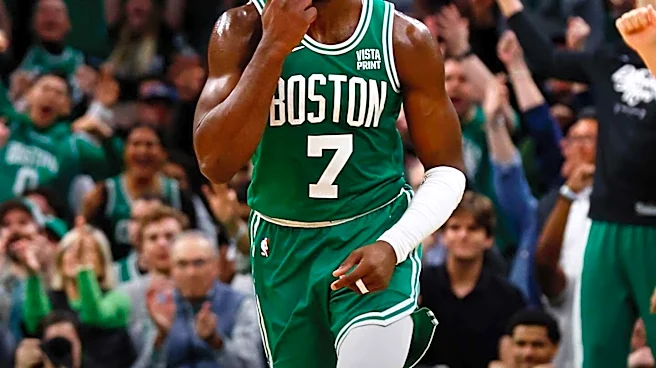
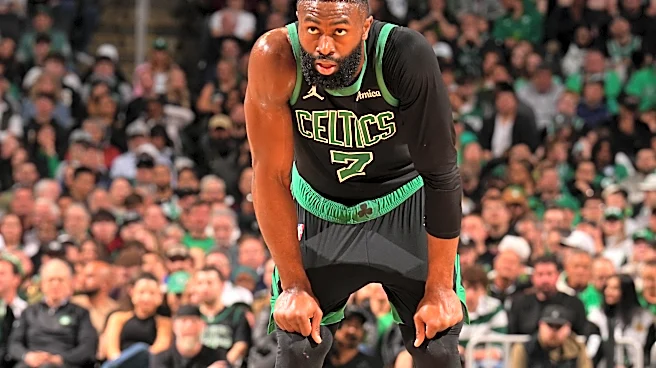
The Boston Celtics have traded Jaylen Brown to the Philadelphia 76ers, a move influenced by the financial implications of Brown's contract. Brown, who was on a supermax extension with the Celtics, had a significant cap hit that affected the team's ability
to maneuver within the salary cap. The trade involved the Celtics receiving Paul George, along with two first-round and two second-round draft picks. Despite Brown's impressive performance last season, where he averaged 28.7 points and 5.1 assists per game, his $57 million salary was seen as a burden under the new salary cap rules. This trade reflects the Celtics' strategic decision to manage their financial commitments while still aiming to remain competitive.
Why It's Important?
This trade highlights the growing importance of financial management in the NBA, where teams must balance player performance with salary cap constraints. The Celtics' decision to trade Brown, despite his high performance, underscores the challenges teams face under the league's financial rules. For the 76ers, acquiring Brown could bolster their roster, but it also adds a significant salary to their cap. This move could influence other teams' strategies, as they may need to reassess their rosters and financial commitments to remain competitive. The trade also reflects broader trends in the NBA, where financial considerations are increasingly dictating team decisions.
What's Next?
The Celtics will need to integrate Paul George into their lineup and assess how his addition impacts their team dynamics. For the 76ers, the focus will be on maximizing Brown's contributions while managing the increased salary cap pressure. Both teams will likely continue to explore additional trades or signings to optimize their rosters. The broader NBA landscape may see similar moves as teams navigate the complexities of the salary cap and seek to build competitive rosters within financial constraints.