




What's Happening?
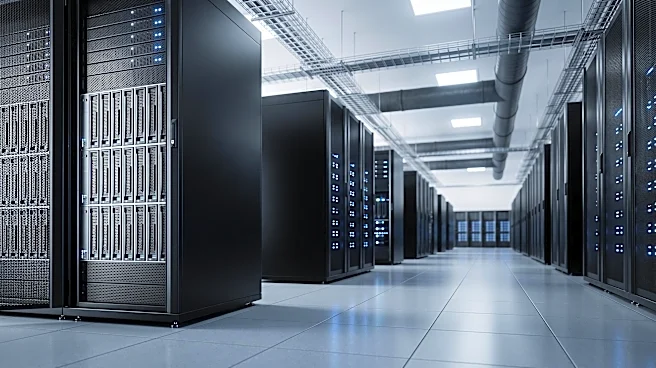
Amazon Web Services (AWS) has announced plans to deploy an additional 2 million Nvidia Graphics Processing Units (GPUs) between 2027 and 2028. This deployment will include Nvidia's Blackwell Ultra, Rubin, and Rubin Ultra systems, building upon the 1 million Nvidia chips
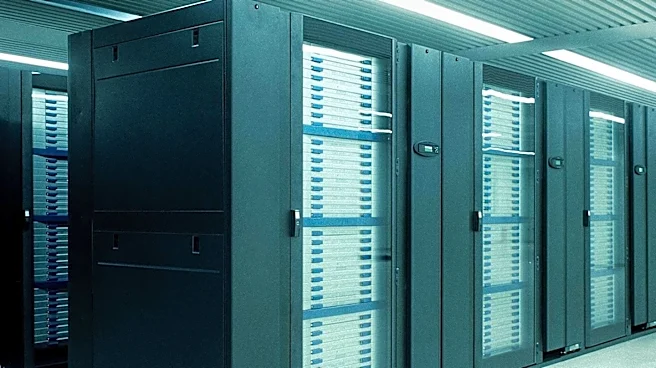
Amazon had already committed to installing starting in 2026. This significant investment in Nvidia hardware comes even as Amazon continues to develop its own AI chips, such as the Trainium processors through Annapurna Labs. The collaboration between AWS and Nvidia is also expanding beyond just GPUs, with plans to construct dedicated AI factories for the U.S. government utilizing 100,000 GPUs. Furthermore, Nvidia's Nemotron models will be integrated into Amazon Bedrock and SageMaker, and Amazon Robotics will leverage Nvidia's physical AI platform for warehouse automation. Despite this reliance on Nvidia, Amazon is not abandoning its internal chip strategy; Annapurna Labs will work with Nvidia to enhance Trainium chips with NVLink Fusion and high-bandwidth memory.
Why It's Important?
This move by AWS underscores the critical role Nvidia's GPUs play in the current artificial intelligence infrastructure, even for major tech companies like Amazon that are investing heavily in proprietary AI chip development. The substantial scale of this deployment highlights the immense demand for high-performance computing power required for training and running sophisticated AI models. For the U.S. government, the planned AI factories signify a strategic investment in advanced AI capabilities, potentially impacting national security, defense, and various public sector applications. The integration of Nvidia's Nemotron models into Amazon's AI services like Bedrock and SageMaker will likely enhance the capabilities available to developers and businesses, accelerating AI adoption across industries. This dual strategy of both acquiring leading external hardware and developing internal solutions reflects a broader industry trend where companies seek to balance immediate performance needs with long-term control and cost efficiency in their AI stacks.
What's Next?
The deployment of the additional 2 million Nvidia GPUs is scheduled to occur between 2027 and 2028, indicating a sustained period of infrastructure build-out for AWS. The collaboration between Annapurna Labs and Nvidia to extend NVLink Fusion with high-bandwidth memory for Trainium chips suggests continued innovation and optimization in AI hardware. The establishment of dedicated AI factories for the U.S. government will likely proceed, potentially leading to new government contracts and advancements in AI applications for public services. As Nvidia's Nemotron models are integrated into Amazon Bedrock and SageMaker, developers and enterprises can anticipate enhanced AI model offerings and capabilities. The use of Nvidia's physical AI platform by Amazon Robotics for warehouse automation points towards further advancements in logistics and operational efficiency, potentially setting new industry standards for automation and AI integration in physical environments.
Beyond the Headlines
This strategic decision by Amazon reveals a complex interplay between competition and collaboration in the rapidly evolving AI landscape. While Amazon is a significant player in developing its own AI chips, the sheer demand and advanced capabilities of Nvidia's GPUs necessitate continued reliance on external providers. This dynamic highlights the 'CUDA moat' – Nvidia's proprietary software platform that has become an industry standard, making it challenging for competitors to fully displace their hardware. The investment in AI factories for the U.S. government also points to the increasing national strategic importance of AI infrastructure, potentially leading to more government-backed initiatives and partnerships in the tech sector. Furthermore, the continuous demand for specialized AI hardware is driving innovation not only in chip design but also in related areas such as cooling systems, electrical components, and data center construction, creating a ripple effect across various industries and supply chains.