



What's Happening?
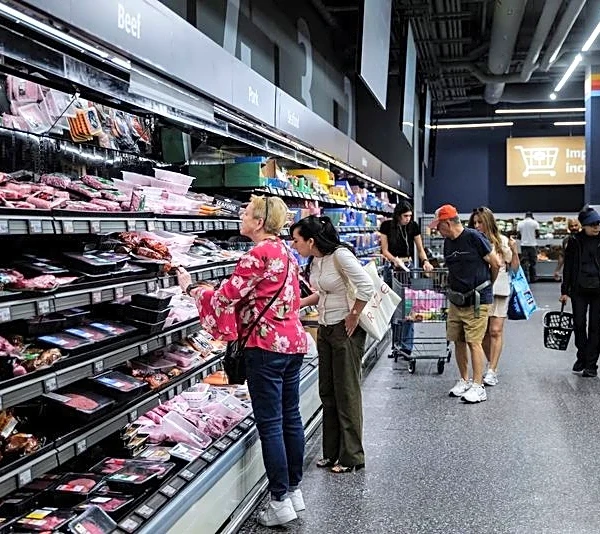
Grocery delivery giant Instacart is reportedly exploring a potential sale and has engaged in preliminary discussions with major players like Uber and DoorDash. An investment bank is assisting Instacart, currently valued at approximately $13 billion, in assessing
its strategic options. A potential acquisition could fetch between $16 billion and $17 billion, assuming a 30% to 40% premium based on recent public tech deals. This development comes as both Uber and DoorDash are actively expanding their grocery delivery services and pursuing significant acquisitions within the broader food delivery sector. Instacart's valuation has seen considerable fluctuation, dropping from $39 billion in a 2021 private funding round to about $10 billion by its 2023 IPO, though its shares have since gained roughly 70%. Instacart's revenue growth has also slowed, from 19% in 2023 to 11% in the subsequent two years.
Why It's Important?
This potential sale signifies a major consolidation trend within the competitive and rapidly evolving online delivery market. For Uber and DoorDash, acquiring Instacart would significantly bolster their grocery delivery capabilities, allowing them to capture a larger share of the e-commerce food market. However, any such acquisition would likely face intense antitrust scrutiny, a factor that previously derailed DoorDash's 2021 talks to acquire Instacart. The Biden administration's stance on market concentration could pose a significant hurdle. For Instacart, a sale could provide a strategic exit and potentially a higher valuation than its current market standing, especially given its slowed revenue growth compared to its competitors. The outcome of these discussions will have substantial implications for the competitive landscape of the U.S. delivery industry, affecting market share, pricing strategies, and consumer choices in grocery and food delivery services.
What's Next?
While preliminary discussions have taken place, no agreement has been reached, and a sale remains uncertain. The primary hurdle for any potential acquisition by Uber or DoorDash will be navigating antitrust concerns, which have historically complicated such deals. Regulators will likely scrutinize the impact on market competition, given the already dominant positions of these companies. Instacart's strategy of dedicating most of its free cash flow to share repurchases indicates a focus on shareholder value, which could influence its negotiation position. The company's existing partnerships, such as its deal with Uber to offer restaurant delivery via Uber Eats and the use of Instacart's Carrot Ads technology on Uber Eats, could either facilitate or complicate a full acquisition. The market will closely watch for further announcements regarding these discussions and any regulatory responses.
Beyond the Headlines
The exploration of Instacart's sale reflects a broader maturation and consolidation phase in the on-demand delivery sector, which saw explosive growth during the pandemic. Companies are now seeking sustainable profitability and market dominance through strategic acquisitions and diversification. The antitrust concerns highlight the increasing tension between rapid technological expansion and regulatory oversight, particularly in sectors that have become essential services for many consumers. This situation also underscores the challenges faced by companies like Instacart in maintaining high growth rates post-pandemic and the pressure to find new revenue streams, such as advertising. The eventual outcome of these talks could reshape consumer habits, influence labor practices for gig workers, and set new precedents for how large tech companies navigate competitive pressures and regulatory environments in the U.S. market.