


What's Happening?
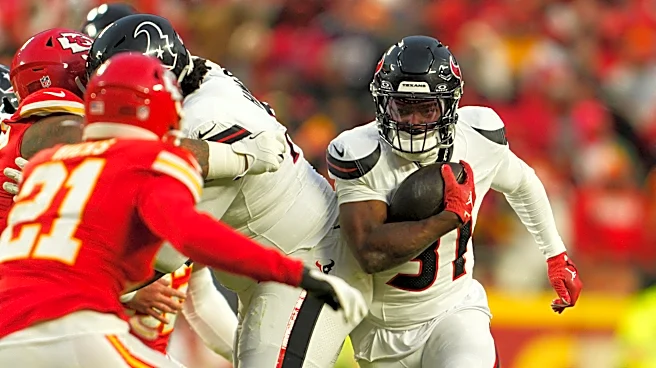
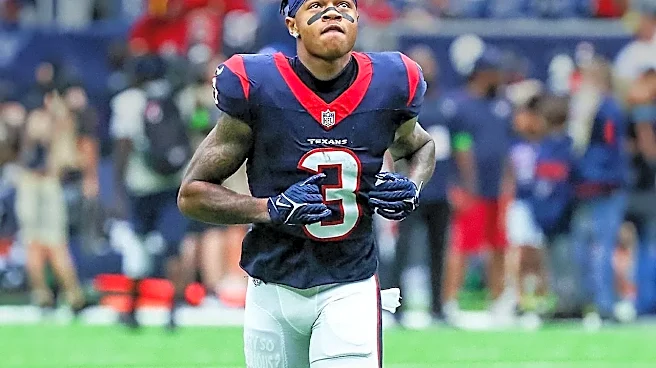
Wide receiver Marvin Harrison Jr. has not seen an improvement in his on-field production since being traded from the Arizona Cardinals to the Houston Texans. After four unproductive games with the Cardinals, where he recorded five catches for 85 yards
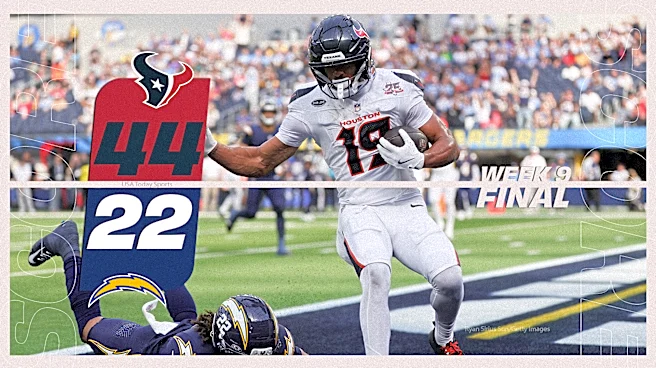
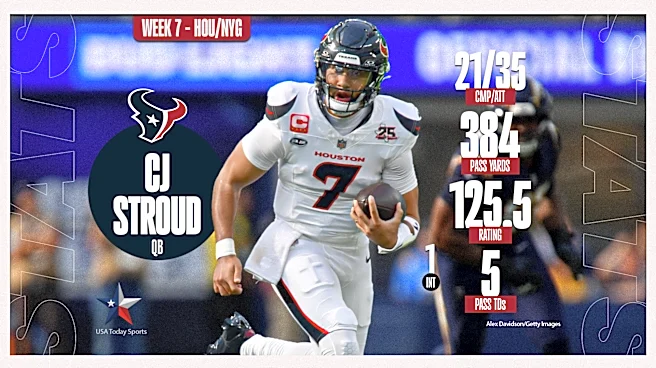
and one touchdown, he was moved to the Texans. In his first three games with Houston, Harrison Jr. has accumulated six catches for 60 yards and one touchdown. Most recently, in a game where Texans quarterback C.J. Stroud threw for 384 yards and five touchdowns, Harrison Jr. only managed two catches for 20 yards, placing him sixth on the team in receiving yards for that game. This continued struggle comes two and a half seasons into his NFL career, despite being the fourth overall pick in the 2024 NFL draft and the son of a Hall of Fame wide receiver.
Why It's Important?
Marvin Harrison Jr.'s ongoing struggles have significant implications for both the Houston Texans and the Arizona Cardinals, as well as for the broader NFL draft evaluation process. For the Texans, the trade was a gamble on Harrison Jr.'s potential, hoping a change of scenery and a reunion with his college quarterback, C.J. Stroud, would unlock his talent. His continued low production raises questions about the effectiveness of this strategy and the team's investment. For the Cardinals, the trade, which yielded a second-round pick, appears to be a shrewd move, suggesting their assessment of his performance issues was accurate. This situation highlights the inherent risks in high draft picks and the challenges of player development, impacting team strategies and future draft decisions across the league. It also affects fantasy football players, as Harrison Jr. is currently not considered a viable option in most league formats.
What's Next?
The Houston Texans will likely continue to monitor Marvin Harrison Jr.'s performance closely. While he is still young at 24, the expectation for a fourth overall draft pick is significantly higher than his current output. The team will need to determine if his struggles are due to acclimation to a new offense, an inability to create separation, or other factors. His future role and playing time could be impacted if other receivers on the team continue to outperform him. For the Cardinals, the trade's success reinforces their decision-making, potentially influencing their approach to future player evaluations and trades. The ongoing narrative around Harrison Jr.'s career will serve as a case study for NFL teams evaluating top prospects and managing player transitions.
Beyond the Headlines
Marvin Harrison Jr.'s situation extends beyond mere statistics, touching upon the immense pressure placed on high-draft picks, especially those with a famous lineage. As the son of a Hall of Fame wide receiver, the expectations for Harrison Jr. were exceptionally high, creating a narrative of 'can't-miss prospect.' His current performance challenges this perception, prompting a deeper look into how player potential is assessed versus actual on-field results. This scenario also raises questions about the role of team environment and coaching in player development, as both the Cardinals and Texans have attempted to integrate him. The ongoing struggle could influence how the NFL community views prospects from highly successful college programs, particularly those with strong family ties to the sport, emphasizing that pedigree does not guarantee professional success.