

What's Happening?
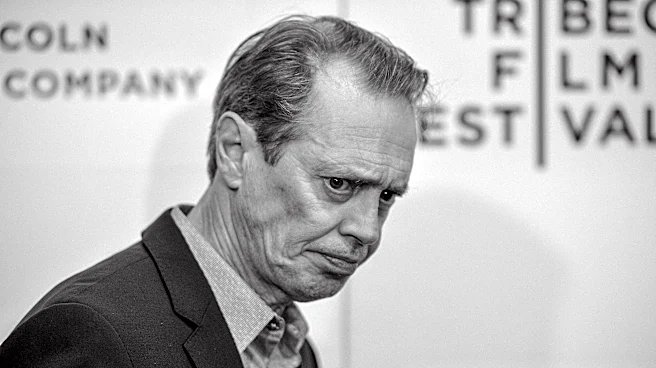
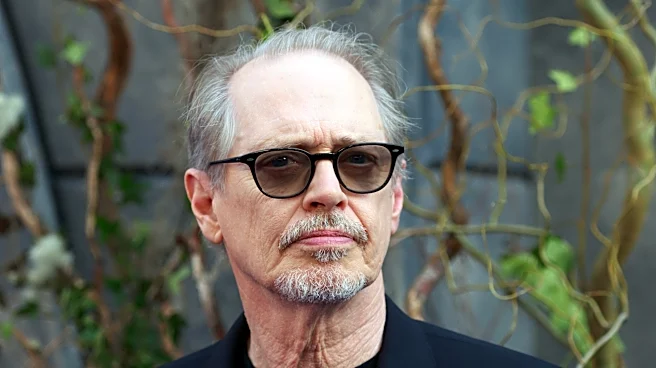
Steve Buscemi takes on the role of MJ, a CIA bureau chief, in Martin McDonagh's new film 'Wild Horse Nine,' which is set to open in theaters on Friday, November 6. The film delves into America's mid-century foreign policy, specifically touching upon the 1973
Chilean coup d'état and the JFK assassination. Buscemi's character oversees two CIA operatives, Chris (John Malkovich) and Lee (Sam Rockwell), who are assigned to Easter Island. The narrative explores themes of guilt, American intervention in foreign democracies, and the historical implications of CIA actions. Buscemi has expressed his admiration for McDonagh's writing, particularly his ability to craft strong characters and dialogue within ensemble pieces. The actor also shared personal recollections of the JFK assassination, which occurred when he was five years old, highlighting the profound impact of that period on his life.
Why It's Important?
The film's exploration of historical U.S. foreign policy, particularly the CIA's involvement in events like the Chilean coup and the JFK assassination, carries significant weight. It prompts audiences to reflect on America's past interventions and their long-term consequences, drawing parallels to contemporary geopolitical situations. Steve Buscemi's portrayal of a CIA bureau chief adds a layer of complexity to the narrative, potentially sparking discussions about the ethics and morality of intelligence operations. The film's release comes at a time when discussions about democracy's fragility and the lessons learned from history are particularly relevant, as noted by Buscemi himself. By examining these historical events through a dramatic lens, 'Wild Horse Nine' could contribute to a broader public discourse on accountability, national identity, and the ongoing impact of past decisions on present-day international relations.
What's Next?
With 'Wild Horse Nine' opening in theaters on November 6, the film is expected to generate considerable discussion among critics and audiences regarding its historical themes and political commentary. The performances by Steve Buscemi, John Malkovich, and Sam Rockwell are likely to be a focal point of reviews. The film's release could also reignite interest in the historical events it depicts, potentially leading to renewed public discourse on the CIA's role in past international affairs and the legacy of U.S. foreign policy. As the film touches on the fragility of democracy, its message may resonate with current political climates, prompting further reflection on contemporary challenges to democratic institutions both domestically and abroad.
Beyond the Headlines
Beyond its immediate narrative, 'Wild Horse Nine' delves into the deeper implications of historical events and their psychological toll on individuals involved in covert operations. The film's setting on Easter Island, with its ancient moai, provides a spiritual backdrop that forces characters to confront their past actions and guilt. This artistic choice highlights the ethical dimensions of state-sponsored interventions and the personal burdens carried by those who execute them. The film also subtly critiques the way historical narratives are constructed and perceived, suggesting that the past continues to influence the present in often unacknowledged ways. By weaving together personal stories with significant historical moments, 'Wild Horse Nine' encourages a more nuanced understanding of the complexities of power, morality, and the enduring impact of political decisions on human lives.