





What's Happening?
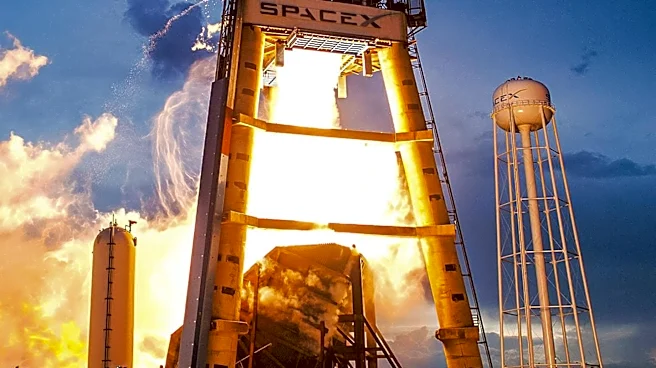
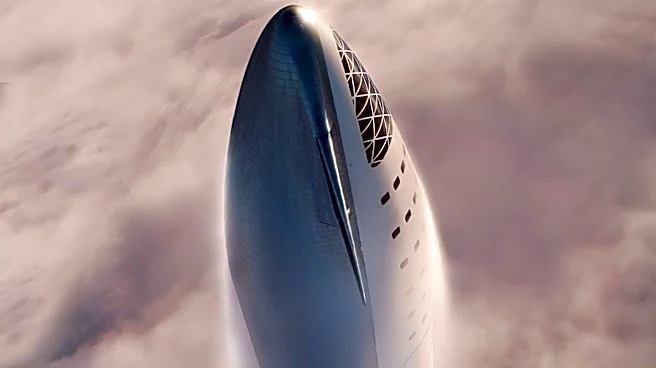
SpaceX has successfully completed a 60-second static fire test of all six Raptor engines on Ship 40, marking a significant milestone for the upcoming Starship Flight 13. Conducted on July 2, 2026, at the Massey test site at Starbase, Texas, the test involved
firing the engines at full thrust for the entire duration. This test is crucial as it validates the engine performance, fuel flow, and pressure systems while the spacecraft remains grounded. The successful completion of this test clears a major pre-launch hurdle for the upper-stage spacecraft, which is part of SpaceX's ongoing efforts to advance its Starship program. The upcoming Flight 13 follows Flight 12, which experienced a significant anomaly when the Super Heavy booster failed to reignite its engines, resulting in a 'hard splashdown' in the Gulf of Mexico. This incident led the FAA to classify it as a mishap, requiring SpaceX to conduct a formal investigation before resuming launches.
Why It's Important?
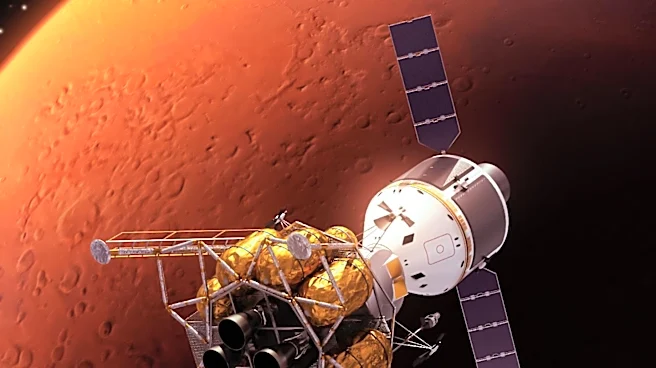
The successful static fire test is a critical step for SpaceX as it prepares for the next phase of its Starship program. This program is pivotal for SpaceX's long-term goals, including crewed missions to Mars and other deep-space explorations. The ability to conduct such tests and resolve previous anomalies demonstrates SpaceX's commitment to advancing space technology and ensuring the safety and reliability of its spacecraft. The outcome of Flight 13 will be closely watched by industry stakeholders, as it represents the second test flight of the Starship Block 3 configuration and the first to use Booster 20. A successful launch could bolster confidence in SpaceX's capabilities and potentially accelerate timelines for future missions.
What's Next?
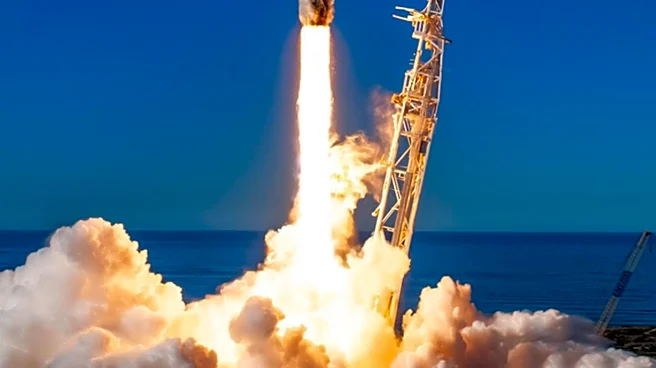
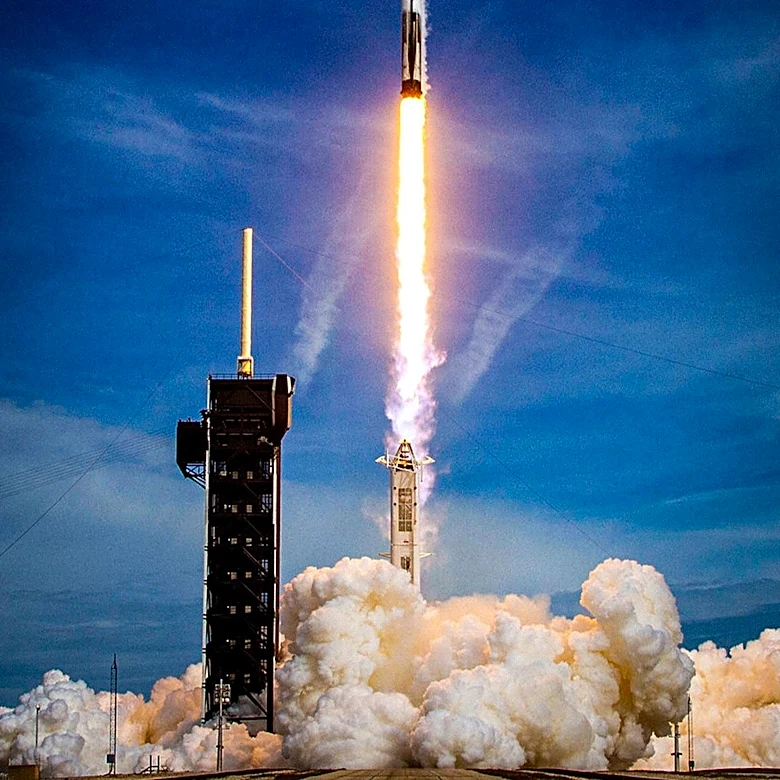
With the static fire test completed, SpaceX is on track for a July launch of Flight 13. The company will continue preparations, including final checks and integration of the spacecraft with Booster 20. The upcoming launch will be a critical test of the new-generation vehicles and their ability to perform as expected. Stakeholders, including regulatory bodies like the FAA, will be monitoring the launch closely to ensure compliance with safety standards. A successful launch could pave the way for more frequent and ambitious missions, further solidifying SpaceX's position as a leader in the aerospace industry.