







What's Happening?
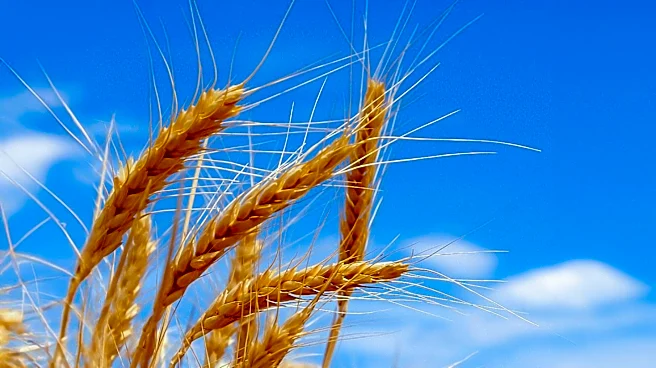
Wheat prices in the U.S. saw an increase on Monday, with Chicago SRW, KC HRW, and MPLS spring wheat futures all closing higher. The National Agricultural Statistics Service (NASS) reported that 86% of the U.S. winter wheat crop has been harvested, aligning
with the normal pace. The spring wheat crop is 98% headed, slightly ahead of the five-year average, with 5% harvested. Despite these positive indicators, the weekly Export Inspections report showed a significant drop in wheat shipments, down 19.68% from the previous week and less than half compared to the same week last year. South Korea, Thailand, and the Philippines were the primary destinations for U.S. wheat exports.
Why It's Important?
The rise in wheat prices reflects market reactions to both domestic harvest progress and international demand fluctuations. The decline in export inspections suggests potential challenges in maintaining export levels, which could impact U.S. farmers and the agricultural sector. The demand from international markets like South Korea indicates ongoing global reliance on U.S. wheat, but the reduced shipment volumes highlight logistical or competitive challenges. This situation underscores the importance of monitoring export trends and market conditions to support U.S. agricultural stakeholders.
What's Next?
With a South Korean mill issuing a tender for additional U.S. wheat, there may be opportunities for increased exports if logistical challenges are addressed. The agricultural sector will need to focus on optimizing supply chain efficiencies and exploring new markets to sustain export levels. Continued monitoring of crop conditions and international demand will be crucial for stakeholders to adapt to changing market dynamics.