





What's Happening?
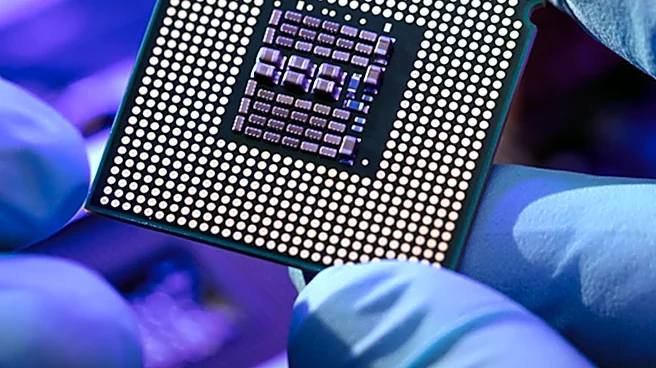
Micron Technology CEO Sanjay Mehrotra has stated that artificial intelligence (AI) is fundamentally reshaping the memory market, leading to a significant increase in demand for higher-capacity and faster memory components. According to Mehrotra, data-center
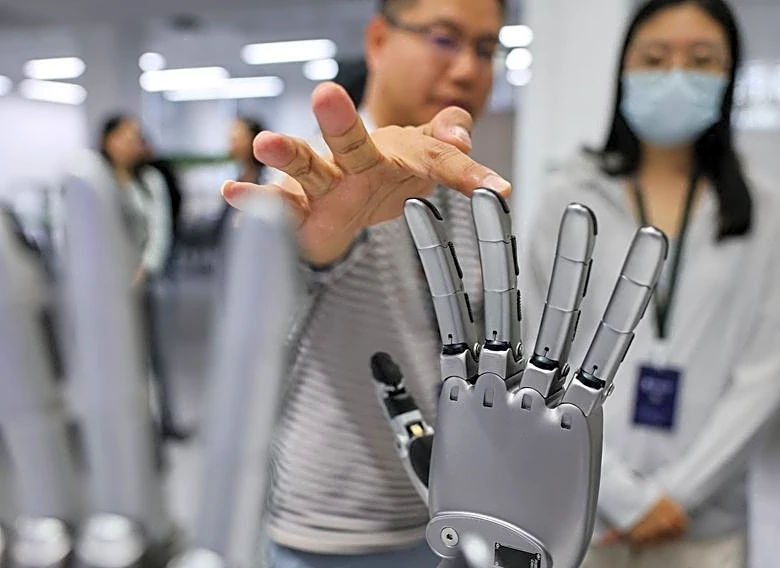
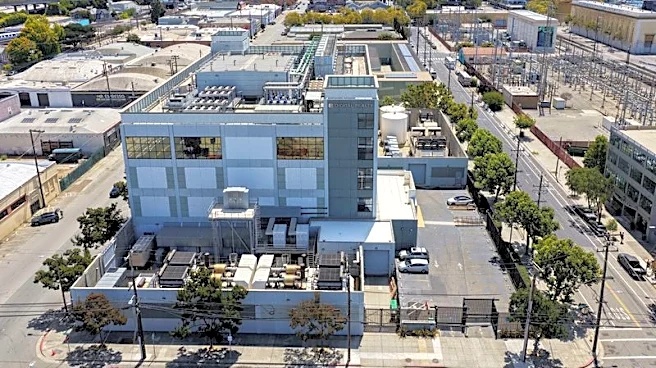
customers are currently requesting approximately 50% more memory supply than Micron can commit to. This surge in demand is not limited to data centers but also extends to emerging technologies such as autonomous vehicles, robotics, and various AI-enabled consumer products. In response to this growing need and to further its focus on future memory technologies, Micron has announced plans for a $10 billion investment over the next decade to establish a new U.S. research center in Boise, Idaho. This facility will concentrate on advanced memory, computing architectures, packaging, and semiconductor manufacturing, as part of Micron's broader commitment of over $250 billion in planned U.S. manufacturing and research spending.
Why It's Important?
This announcement from Micron's CEO underscores the critical role of memory technology in the burgeoning AI landscape and highlights a significant supply-demand imbalance. For the U.S. technology sector, this investment signifies a strategic move to bolster domestic semiconductor research and manufacturing capabilities, aligning with national efforts to reduce reliance on foreign supply chains. The increased demand for memory components driven by AI applications will likely translate into sustained revenue growth for Micron and other memory manufacturers, impacting their stock performance and market valuations. Furthermore, the development of advanced memory and computing architectures at the new Boise research center could lead to breakthroughs that accelerate AI innovation across various industries, from automotive to consumer electronics. This investment also creates high-skilled jobs and strengthens the U.S.'s position in the global semiconductor industry, which is vital for economic competitiveness and national security.
What's Next?
Micron's $10 billion investment in its Boise, Idaho research center is expected to drive significant advancements in memory technology, with the facility focusing on advanced memory, computing architectures, packaging, and semiconductor manufacturing. The company's commitment of over $250 billion in planned U.S. manufacturing and research spending indicates a long-term strategy to capitalize on the AI-driven demand. The market will closely watch Micron's progress in scaling up its production capabilities and developing next-generation memory solutions to meet the escalating needs of data centers, autonomous vehicles, and AI-enabled consumer products. The success of these initiatives could influence other semiconductor companies to increase their investments in U.S.-based research and manufacturing, potentially leading to a broader revitalization of the domestic semiconductor industry. Additionally, the ongoing supply constraints in memory could persist, impacting the pricing and availability of AI hardware components across various sectors.
Beyond the Headlines
The profound impact of AI on the memory market, as articulated by Micron's CEO, extends beyond immediate supply and demand dynamics. It signals a fundamental shift in how computing infrastructure is designed and optimized, with memory becoming an increasingly central and specialized component rather than a commodity. This could lead to a re-evaluation of traditional hardware architectures, fostering innovation in areas like in-memory computing and specialized memory types tailored for AI workloads. The substantial investment in U.S. research and manufacturing also carries geopolitical implications, as nations increasingly recognize the strategic importance of semiconductor independence. This move could spur further government incentives and private sector investments to secure domestic supply chains, potentially leading to a more distributed and resilient global semiconductor ecosystem. Ethically, the rapid advancement of AI-driven memory could also raise questions about data storage, energy consumption, and the environmental footprint of increasingly powerful computing systems.