



What's Happening?
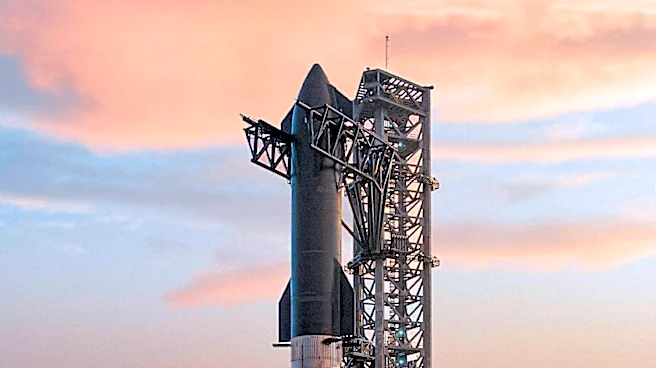
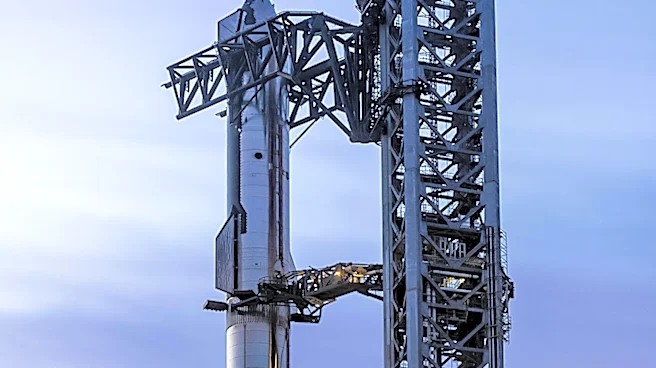
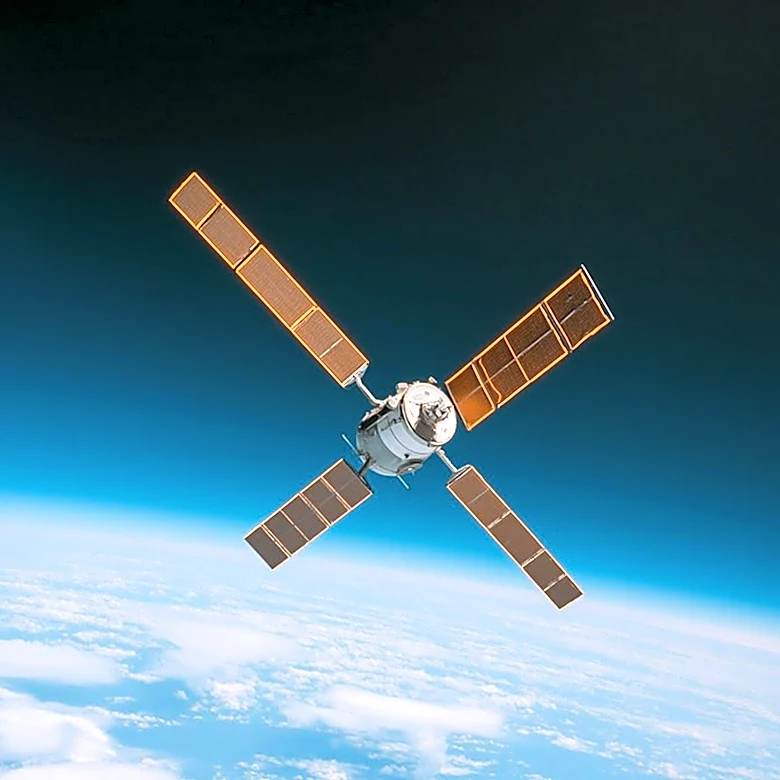
On July 24, 2026, SpaceX's Starship Flight 13 successfully deployed 20 next-generation Starlink V3 satellites, marking a significant milestone in expanding the Starlink network's capacity. The satellites were launched on a suborbital test trajectory and burned
up on re-entry, but the data collected during their brief time in orbit is crucial for future developments. The mission tested the satellites' ability to extend solar arrays, deploy antennas, and connect with the existing Starlink constellation. This deployment is a foundational step towards achieving higher network speeds and capacity for Starlink customers.
Why It's Important?
The deployment of Starlink V3 satellites represents a major advancement in SpaceX's efforts to enhance its satellite internet service. The new satellites are designed to provide significantly higher throughput and capacity compared to previous versions, potentially transforming the satellite internet landscape. However, the path to realizing these improvements involves obtaining FCC spectrum approval and maintaining a consistent Starship launch cadence. The successful deployment demonstrates the hardware's capability to survive and operate in space, paving the way for future operational deployments that could significantly enhance internet access globally.
What's Next?
For Starlink customers to experience the benefits of V3 satellites, SpaceX must secure FCC approval and establish a regular launch schedule to build out the V3 constellation. The company will continue testing and refining its technology to ensure the satellites can operate effectively in orbit. As SpaceX progresses, it will focus on overcoming regulatory and logistical challenges to deliver improved internet services. The successful deployment of V3 satellites is a promising step, but further developments are needed to translate these advancements into tangible benefits for users.