







What's Happening?
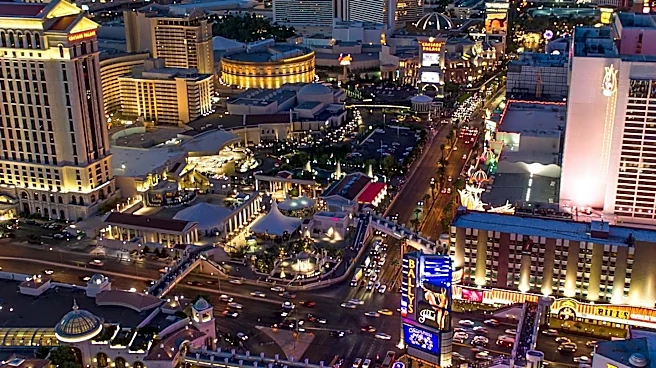
A Las Vegas hotel, OYO, is currently under investigation by two major travel booking sites, Booking.com and Expedia, following claims by social media influencers that it used deceptive listings to attract customers. Travelers reported seeing listings for
hotels named 'Palette' and 'Collection O' on these sites, with photos and details that closely resembled the OYO Hotel. Ariana Patiño, a Utah mother, booked a stay at 'Palette' to avoid OYO, only to find herself at the OYO Hotel. A receptionist at OYO reportedly admitted that 'Palette' was indeed OYO and that the listing was created to gauge ad traction. Another influencer, 'Vegas Starfish' on TikTok, amplified these claims to her 1.8 million followers, stating that OYO, struggling with poor reviews, created fake hotel names like 'Palette' to mislead potential guests. Employees from OYO reportedly confirmed internal chaos regarding the corporate decision, suggesting management did not anticipate the public reaction.
Why It's Important?
This incident highlights a growing concern within the travel industry regarding the authenticity and transparency of online listings, particularly as travel influencers play a significant role in shaping consumer decisions. The alleged deceptive practices by OYO could erode consumer trust in booking platforms and the hotels listed on them. For travelers, it underscores the risk of booking accommodations based solely on online appearances, especially when faced with potentially misleading information. For the travel industry, it signals a need for more stringent verification processes for hotel listings to prevent similar occurrences. The involvement of social media influencers in exposing these practices also demonstrates their power in holding businesses accountable and influencing public perception, which can have substantial financial and reputational consequences for companies involved in such controversies.
What's Next?
Booking.com and Expedia have confirmed they are investigating the listings for 'Palette' and 'Collection O.' These investigations could lead to the removal of the deceptive listings, penalties for OYO, or a review of their listing verification policies. The outcome may also prompt other travel booking platforms to enhance their fraud detection measures. For OYO, the immediate future likely involves addressing the allegations and managing the negative publicity, which could impact their bookings and brand reputation. Travelers are likely to become more cautious and critical of online hotel listings, potentially relying more on trusted reviews and direct bookings. The incident may also encourage greater scrutiny from regulatory bodies regarding truth in advertising within the online travel sector.
Beyond the Headlines
The OYO hotel controversy touches upon broader ethical considerations in digital marketing and the increasing challenge of maintaining authenticity in an online-driven world. The use of AI-generated edits to create seemingly distinct hotel brands, as suggested by the similarities between OYO and 'Collection O' photos, raises questions about the ethical boundaries of digital manipulation in advertising. This trend could lead to a 'race to the bottom' where businesses prioritize attracting clicks over providing genuine information, ultimately harming consumer confidence. Furthermore, the power of social media influencers in uncovering and disseminating such information underscores a shift in consumer advocacy, where individual voices, amplified by large followings, can exert significant pressure on corporations. This incident could serve as a case study for how digital transparency and accountability will continue to evolve in the age of social media and AI.