




What's Happening?
Consumer Reports has released a series of water-saving tips for lawns and gardens, aimed at helping U.S. residents conserve water, save money, and reduce maintenance time. These recommendations come as intense heat and dry conditions have led to water restrictions
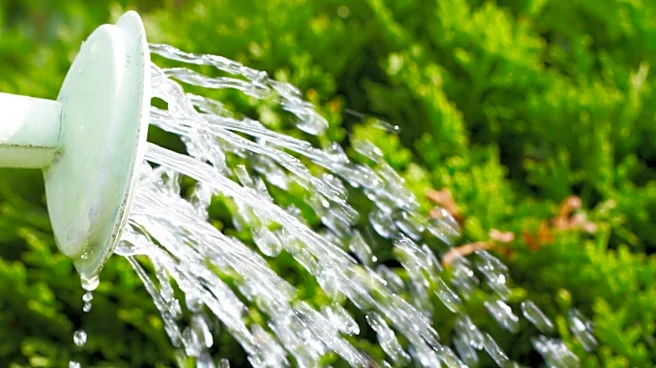
in many areas. Key suggestions include replacing some grass with mulch, ground cover, drought-tolerant plants, or ornamental grasses. For existing lawns, Consumer Reports advises letting grass grow longer (three to four and a half inches) to shade the soil and promote deeper root growth, and using a mower's mulch mode to return nutrients and moisture to the soil. Smart watering habits, such as avoiding midday watering and using soaker hoses or drip irrigation, are also recommended. Additionally, using rain barrels to collect water for plants or car washing is suggested, with the FCMP Outdoor Raincatcher highlighted as a top choice.
Why It's Important?
These water-saving tips are critically important for U.S. households and communities, especially in regions prone to drought and water scarcity. By implementing these practices, individuals can significantly reduce their water consumption, which directly impacts local water supplies and infrastructure. This not only helps mitigate the effects of drought but also lowers household utility bills. For the environment, reduced water usage lessens the strain on natural water resources and ecosystems. The recommendations also promote sustainable landscaping practices, encouraging a shift away from water-intensive lawns towards more resilient and environmentally friendly garden designs, which can have long-term positive effects on urban and suburban ecological health.
What's Next?
As climate patterns continue to bring periods of intense heat and drought, the adoption of these water-saving practices is likely to increase across the U.S. Local governments and water authorities may further promote or even mandate some of these measures, such as water-efficient landscaping. Manufacturers of water-saving products like rain barrels, soaker hoses, and drought-tolerant plants may see increased demand. Educational campaigns from organizations like Consumer Reports will continue to play a vital role in informing the public about effective water conservation strategies. The long-term trend will likely involve a broader cultural shift towards more sustainable outdoor living and resource management.
Beyond the Headlines
Beyond the immediate practical benefits, the emphasis on water conservation in lawns and gardens reflects a deeper societal awareness of environmental stewardship and resource management. The shift from pristine, water-guzzling lawns to more natural, drought-tolerant landscapes represents an evolving aesthetic and ethical standard for homeownership. This change can foster a greater connection to local ecosystems and promote biodiversity by encouraging native plant species. It also highlights the interconnectedness of individual actions with broader environmental challenges, demonstrating how small changes at the household level can contribute to significant collective impact on water security and climate resilience. The promotion of rain barrels, for instance, encourages a more circular approach to water use, reducing reliance on treated municipal water for non-potable uses.