






What's Happening?
Actress Molly Ringwald, widely recognized for her roles in iconic 1980s teen films, recently shared her least favorite fashion trends from the decade. In an interview with People, Ringwald, 58, stated that she particularly disliked the oversized power
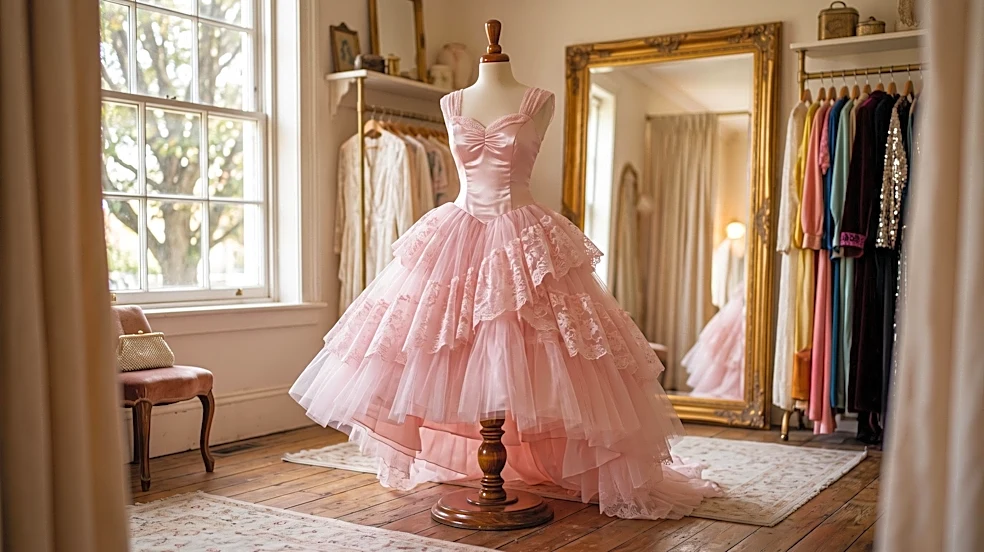
suits and voluminous hairstyles that were prevalent during that era. She clarified that these trends did not align with her personal style at the time, as she gravitated more towards vintage clothing. Ringwald's comments highlight a nuanced perspective on 1980s fashion, contrasting with the general nostalgia many fans hold for the decade's cultural output. She also recalled crying upon seeing the prom dress her character Andie wore in 'Pretty in Pink,' despite it becoming a memorable costume in film history. While she now feels nostalgic for the decade, her aversion to certain fashion elements remains.
Why It's Important?
Molly Ringwald's reflections on 1980s fashion are significant as they offer a personal, insider perspective from one of the decade's most influential figures. Her candid remarks challenge the often-romanticized view of past fashion trends, reminding audiences that not all elements of a bygone era are universally beloved, even by those who defined it. This perspective can influence contemporary fashion cycles, as designers and consumers often draw inspiration from past decades. Understanding which elements are viewed critically by those who lived through them can inform how nostalgic trends are reinterpreted today. Furthermore, her comments underscore the subjective nature of style and how individual preferences can diverge from mainstream trends, even within a highly defined fashion period. This insight is valuable for fashion historians and cultural commentators studying the evolution of style and its reception.
What's Next?
Ringwald's comments may spark further discussions and retrospectives on 1980s fashion, potentially leading to renewed critical analysis of the decade's style choices. Fashion commentators and historians might delve deeper into the practicalities and aesthetics of oversized power suits and large hairstyles, exploring why they were popular and why they might be viewed unfavorably in retrospect. This could also influence current fashion trends, as designers continue to draw inspiration from past decades. There might be a more selective approach to 1980s revival trends, with a greater emphasis on elements that have stood the test of time or are more adaptable to modern sensibilities, rather than a wholesale adoption of all past styles. Her perspective could encourage a more nuanced appreciation of historical fashion, moving beyond simple nostalgia to a more critical understanding of its various facets.
Beyond the Headlines
Molly Ringwald's remarks extend beyond mere fashion commentary, touching upon the broader theme of how cultural memory shapes our perception of the past. Her personal disaffection with certain 1980s trends illustrates that collective nostalgia often filters out less desirable elements, creating a curated, idealized version of history. This phenomenon is common across various cultural domains, where the 'best' aspects of a past era are celebrated while less flattering or uncomfortable elements are overlooked. Her experience with the 'Pretty in Pink' dress, initially disliked but later iconic, highlights the unpredictable nature of cultural impact and how public reception can redefine personal perceptions over time. This dynamic underscores the complex interplay between individual experience, collective memory, and the enduring legacy of cultural artifacts, particularly in fashion and film.