



What's Happening?
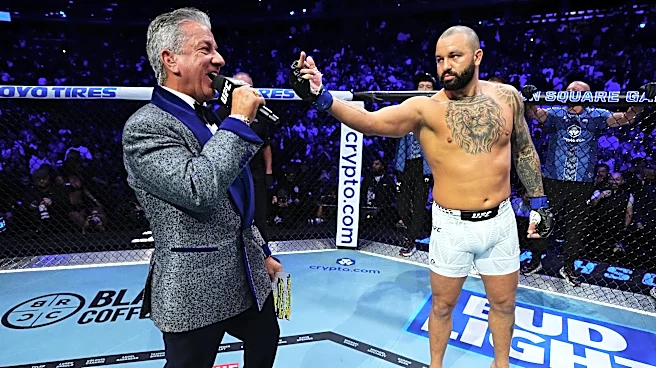
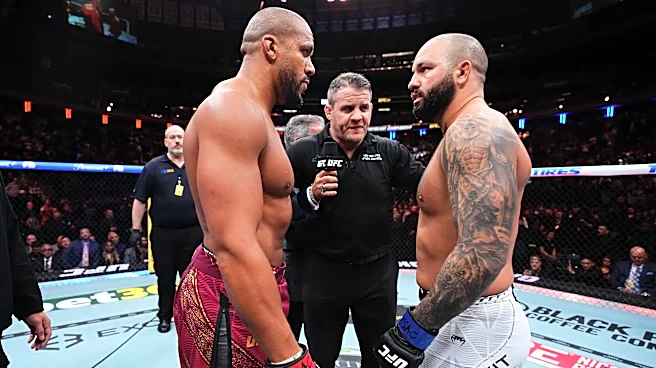
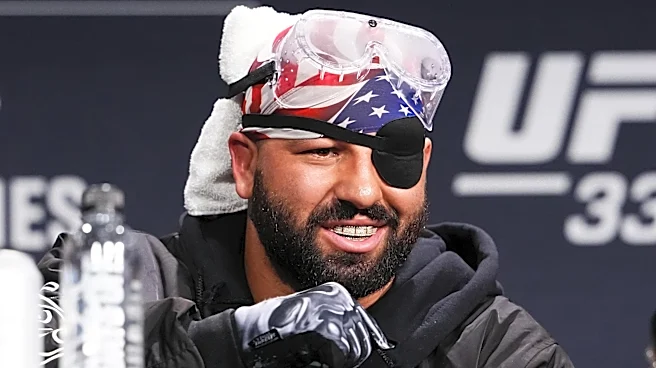
American UFC fighter Josh Hokit has publicly explained his decision to give ring announcer Bruce Buffer the middle finger during the pre-fight announcement for his bout against Frenchman Ciryl Gane. Hokit stated that the gesture was a deliberate act to signify
'f**k professionalism' and was directed at anyone who might 'talk s**t bout my hustle' or how he earns money. The incident occurred on November 15 during the main event of UFC 334 in New York, USA. In the heavyweight championship fight, Ciryl Gane defeated Hokit by unanimous decision, successfully defending his title. Gane's professional mixed martial arts record now stands at 15 wins, two losses, and one no-contest, while Hokit's record is 10 wins and one loss.
Why It's Important?
Josh Hokit's public explanation for his controversial gesture highlights the ongoing tension between athlete expression and professional conduct in high-profile sports like the UFC. Such actions can generate significant media attention, polarizing audiences between those who view it as authentic self-expression and those who see it as disrespectful or unprofessional. For the UFC, incidents like this can impact its brand image, potentially leading to disciplinary actions or fines for fighters. It also sparks broader conversations about the role of personality and showmanship in combat sports, where fighters often use various tactics to build their brand and engage fans. The incident underscores the fine line athletes walk between cultivating a rebellious image and adhering to the expectations of a major sports organization.
What's Next?
Following Josh Hokit's explanation, the UFC may choose to address the incident, potentially issuing a statement, a fine, or a warning regarding fighter conduct. While Hokit has provided his rationale, the organization typically maintains standards of professionalism for its athletes. The incident could also influence how Hokit is perceived by fans, promoters, and potential sponsors, either enhancing his 'bad boy' image or drawing criticism. Future pre-fight announcements involving Hokit might be scrutinized more closely, and other fighters could be influenced by his actions, either to emulate or avoid similar displays. The broader discussion about athlete behavior and the boundaries of expression in sports is likely to continue.
Beyond the Headlines
Hokit's gesture and subsequent explanation delve into deeper themes of authenticity, rebellion, and the commodification of identity in professional sports. His statement about 'f**k professionalism' suggests a critique of the polished, corporate image often expected of athletes, asserting a desire to remain true to his 'hustle' and personal brand. This resonates with a segment of the audience that values raw, unfiltered expression over manufactured personas. However, it also raises questions about the responsibility of public figures and the impact of their actions on younger audiences. The incident can be viewed as a micro-rebellion against the strictures of corporate sports, reflecting a broader cultural tension between individual freedom and institutional control, particularly in highly visible and monetized arenas.