


What's Happening?
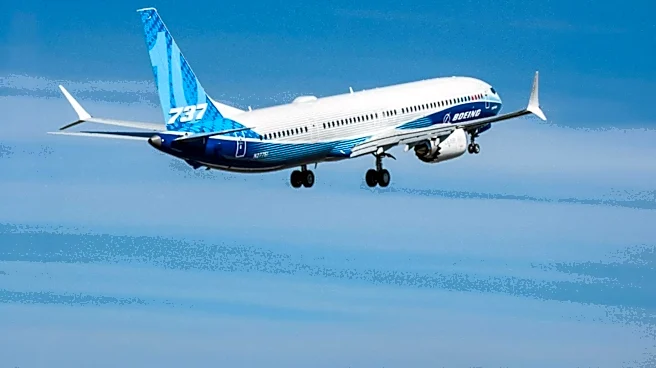
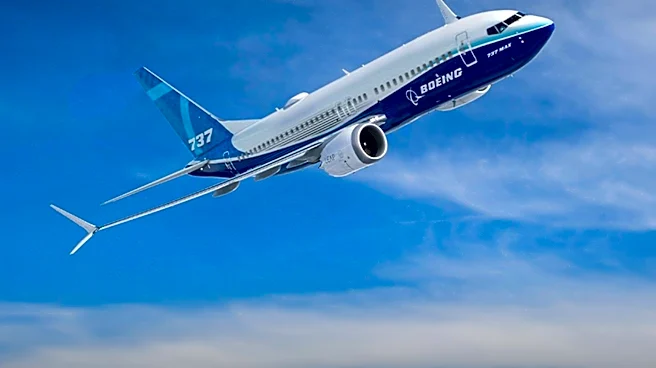
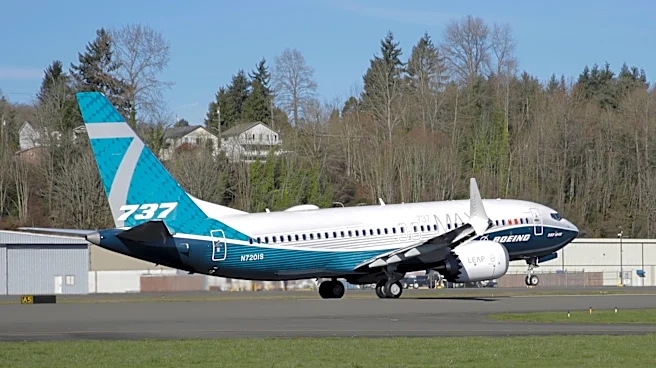
Boeing has received certification from the U.S. Federal Aviation Administration (FAA) for its 737-7 MAX aircraft, marking a significant milestone 15 years after the model was first announced. The certification follows years of addressing complex technical
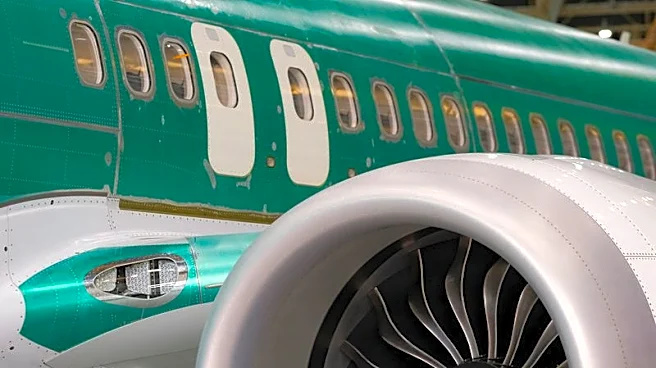
issues and conducting thorough safety analyses. The 737-7, the smallest in the 737 family, boasts the longest range, capable of carrying 172 passengers up to 3,850 nautical miles. The aircraft's development was delayed due to issues that also affected the 737-8 MAX, which experienced fatal crashes in 2018 and 2019. Boeing has since resolved these issues, including specific problems with the 737-7's anti-icing systems.
Why It's Important?
The certification of the 737-7 MAX is a crucial step for Boeing as it seeks to regain market confidence following the setbacks associated with the 737-8 MAX crashes. This development allows Boeing to compete more effectively in the regional jet market, dominated by Airbus and Embraer. The 737-7's long range and passenger capacity make it a versatile option for airlines exploring new routes. The successful certification also reflects Boeing's commitment to addressing safety concerns and improving its aircraft designs, which is vital for maintaining its reputation and market position.
What's Next?
With the 737-7 MAX now certified, Boeing is poised to ramp up production and fulfill orders, including those from U.S. airline Allegiant. The company will continue to focus on resolving outstanding issues with its other models, such as the 777X, which faces its own set of challenges. The FAA's decision on the 737-10, the largest of the MAX generation planes, is also pending. Boeing's ability to navigate these challenges will be critical in determining its future success and competitiveness in the aerospace industry.