





What's Happening?
The film industry is experiencing a notable shift away from grand, orchestral film scores towards more atmospheric sound design, characterized by electronic textures. Historically, film scores by composers like James Horner, John Williams, and Hans Zimmer
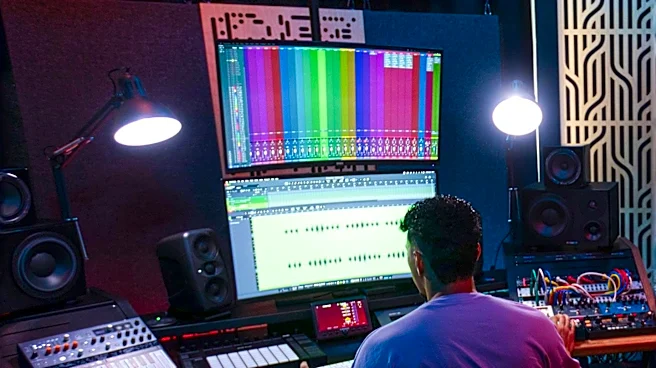
have been integral to cinematic storytelling, often becoming memorable cultural touchstones. However, contemporary cinema increasingly favors mood-establishing soundscapes, exemplified by the work of artists such as Trent Reznor and Atticus Ross, which are designed to unnerve audiences without drawing explicit attention to the music itself. This trend has led to a reduction in melodic themes that audiences can hum or recall, diminishing the emotional resonance that classic scores once provided. The change also impacts the ecosystem of musicians, as scores that once required large orchestras are now often produced by a handful of artists using digital tools, leading to fewer opportunities for orchestral musicians.
Why It's Important?
This evolution in film scoring holds significant implications for the entertainment industry and cultural memory. The decline of orchestral scores means a potential loss of a powerful narrative tool that historically deepened emotional connections between audiences and films. Iconic scores have transcended their cinematic origins, becoming part of collective memory and evoking specific feelings or periods. The shift to atmospheric sound design, while effective for certain genres, risks homogenizing the auditory experience of films and reducing their long-term memorability. Furthermore, the economic impact on professional musicians, particularly those specializing in orchestral performance, is substantial. Fewer opportunities in film scoring can lead to a contraction of the talent pool and a diminished appreciation for the craft of traditional composition and instrumentation. This trend also raises questions about the artistic choices of filmmakers, who may be prioritizing realism or a specific type of emotional manipulation over the broader, more overt emotional impact of a sweeping score.
What's Next?
The trajectory of film scoring will likely continue to be debated within the industry, with some advocating for a return to more melodic and orchestral compositions, while others embrace the innovative possibilities of electronic sound design. While some contemporary films, such as "Oppenheimer" and "Spider-Man: Across the Spider-Verse," still feature notable orchestral elements, their themes may not achieve the same widespread recognition as those from past decades. The discussion will continue to revolve around whether modern scores can achieve the same lasting cultural impact and emotional depth as their predecessors. Filmmakers and composers will need to navigate audience expectations and artistic preferences, potentially leading to a hybrid approach that integrates both traditional and modern techniques. The long-term health of the orchestral music community, particularly in Los Angeles, will depend on finding new avenues for their talents within or outside the film industry.
Beyond the Headlines
The shift in film scoring reflects broader cultural and artistic changes, particularly a potential suspicion of overt emotional manipulation in art. Some contemporary filmmakers may view grand orchestral scores as too prescriptive, preferring more subtle or ambiguous auditory experiences. This aligns with a general trend towards realism in storytelling, where the aim is to mirror life's complexities rather than magnify them through heightened emotion. However, this approach risks diminishing the unique power of cinema to transport and deeply move audiences. The debate also touches upon the role of technology in art, as digital tools enable new forms of sound creation but can also displace traditional craftsmanship. The question of whether modern film scores will achieve the same enduring legacy as those of the past remains open, highlighting a tension between innovation and tradition in the pursuit of cinematic excellence. The emotional landscape of cinema is undergoing a transformation, with implications for how stories are told and remembered.