







What's Happening?
During the Friday practice session at the Autódromo Hermanos Rodríguez in Mexico City, Ferrari driver Lewis Hamilton encountered a power unit issue that cut short his second practice (FP2) session. Hamilton, who had finished FP1 in P4, reported a loss
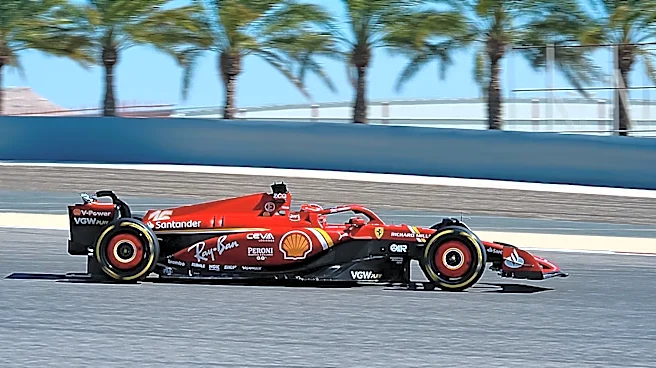
of power from Turn 13, forcing him to end his session early and placing him 11th. Despite the setback and limited track time, which also included an aero rake test during FP1, Hamilton expressed confidence in Ferrari's pace. He stated that he felt good in the car and believed the team was competitive. His teammate, Charles Leclerc, dominated both practice sessions, topping the charts in FP1 and FP2, indicating strong performance from the Ferrari SF-26.
Why It's Important?
This incident is important for several reasons within the context of Formula 1 racing. For Lewis Hamilton, a power unit issue during practice can disrupt crucial data collection and setup optimization, potentially impacting his performance in qualifying and the main race. Given the competitive nature of F1, any lost track time can be a significant disadvantage. For Ferrari, while Leclerc's strong performance is encouraging, Hamilton's issue highlights potential reliability concerns with the power unit, which could affect the team's overall strategy and championship aspirations. The team will need to thoroughly investigate the cause of the power loss to prevent similar occurrences, especially as they aim to challenge for pole position and race wins. The incident also underscores the technical complexities and fine margins that define success in Formula 1.
What's Next?
Following the power unit issue, Ferrari engineers will be investigating the cause of the power loss in Lewis Hamilton's car. Hamilton expressed hope that 'everything is OK' with the car. Despite the limited running, he indicated that he does not anticipate making significant changes to his car's setup for Saturday's FP3 and qualifying sessions, believing the current configuration is already very quick. The team's focus will be on ensuring the car's reliability and optimizing both drivers' setups for qualifying, which will determine their starting positions for Sunday's main event. Charles Leclerc's strong performance in practice suggests Ferrari has a competitive package, and the team will aim to capitalize on this potential.
Beyond the Headlines
The incident with Lewis Hamilton's power unit, while seemingly a technical glitch, touches upon broader themes in Formula 1. It underscores the relentless pursuit of performance and reliability in a sport where technological advancements are paramount. Teams constantly push the boundaries of engineering, leading to both breakthroughs and occasional failures. For a driver of Hamilton's caliber, such disruptions can be mentally challenging, requiring resilience and adaptability. Furthermore, the incident highlights the strategic importance of practice sessions, where every lap provides valuable data for fine-tuning the car. The outcome of such technical issues can have ripple effects, influencing team morale, development priorities, and ultimately, the championship standings. It also reinforces the narrative of Ferrari's ongoing efforts to consistently challenge for top honors, with reliability being a critical component of that ambition.