





What's Happening?
A commission appointed by the Panamanian government has recommended that the controversial Cobre Panama copper mine operate for 25 years without expanding its physical footprint. The mine, managed by First Quantum Minerals, was closed in 2023 after being
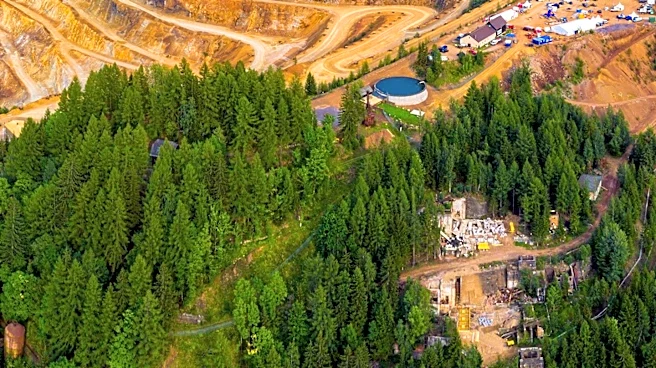
declared unconstitutional following public protests. The commission's report also suggests a gradual reduction of the mine's existing footprint over this period, followed by eight years of 'active closure' and 30 years of post-closure monitoring. Other conditions for reopening include compliance with Supreme Court rulings, state ownership, financial self-sustainability, data transparency, and prioritizing concerns of affected Panamanian communities. However, Piotr Kulas, lead copper analyst at Benchmark, stated that operating the project for 25 years without physical expansion is not feasible. The current pit, Botija, holds only about five to six years of reserves at full plant capacity, and without opening new pits like Colina and Medio, which require clearing thousands of hectares of jungle, the mine's ore throughput would significantly decrease within a few years.
Why It's Important?
This recommendation has significant implications for the global copper market and the U.S. economy, as copper is a critical component in various industries, including electronics, construction, and renewable energy. The Cobre Panama mine was a major global copper producer, and its closure has already impacted supply chains. If the mine cannot operate for 25 years without expansion, as suggested by experts, it could lead to sustained disruptions in copper supply, potentially driving up prices. This would affect U.S. manufacturers and consumers, increasing costs for goods reliant on copper. Furthermore, the requirement for state ownership and financial self-sustainability, coupled with First Quantum Minerals' ongoing lawsuit against Panama for over $27 billion in compensation, creates a complex legal and economic challenge. The resolution of this dispute and the mine's future operational status will influence investor confidence in Panama and potentially other resource-rich nations, impacting foreign direct investment from U.S. companies. The environmental and social considerations, including the clearance of jungle and community concerns, also highlight the growing importance of ESG (Environmental, Social, and Governance) factors in international business operations.
What's Next?
The commission's report is a recommendation, and its implementation faces significant hurdles, particularly the feasibility of operating for 25 years without expansion. The Panamanian government will need to decide how to proceed, balancing environmental concerns, public opinion, and economic realities. The ongoing legal dispute with First Quantum Minerals, which is seeking substantial compensation, is a critical factor; the report makes the resolution of this case a mandatory condition for reopening. First Quantum and its partners would likely only drop their claims if the mine generates sufficient revenue to cover their initial capital expenditures. Given that Panamanian presidents serve single five-year terms, a 25-year plan spans multiple administrations, making consistent policy implementation challenging amidst mixed public opinion. Any restart of the mine is anticipated to be met with further issues and protests, suggesting a prolonged and complex process before a definitive operational plan is established.
Beyond the Headlines
The Cobre Panama situation exemplifies the intricate balance between economic development, environmental protection, and social justice in resource extraction. The public protests that led to the mine's closure underscore a growing global trend where local communities and environmental groups are increasingly empowered to challenge large-scale industrial projects. This case could set a precedent for how governments and corporations navigate such conflicts, particularly in developing nations. The expert opinion that the mine cannot operate for 25 years without expansion, despite the commission's recommendation, highlights a potential disconnect between political aspirations and practical realities. This raises questions about the long-term sustainability of resource management policies that may not fully account for geological and operational necessities. The requirement for state ownership and financial self-sustainability also reflects a broader nationalistic sentiment in some countries regarding control over natural resources, potentially influencing future investment models and partnerships with international mining companies.