




What's Happening?
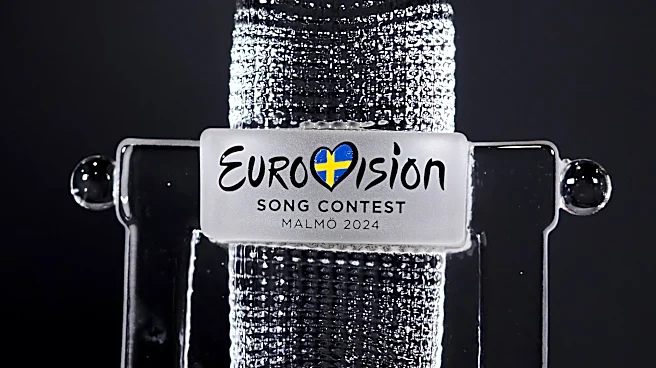
Carmelle, a 19-year-old pop star from the Philippines, has won the first-ever Eurovision Song Contest Asia, held in Bangkok, Thailand. Carmelle secured the title with her performance of 'Sobra-Sobra (Too Much),' a song she described as a tribute to strong
Filipino women. The event, which took place on November 14, featured eleven countries from the region. Host nation Thailand finished second, followed by Vietnam, Malaysia, and Laos. The competition aimed to expand the Eurovision brand into Asia, a region with a vast and diverse music scene. Despite a smaller audience in Bangkok compared to its European counterpart, the event showcased high energy and elaborate performances, utilizing elements like smoke, flares, and eye-catching visuals. The Asia edition was organized by commercial television, differing from the European version run by national broadcasters.
Why It's Important?
The launch of Eurovision Song Contest Asia signifies a strategic effort to globalize a well-established European cultural phenomenon. While the European version has a 70-year history and draws massive viewership, its expansion into Asia presents both opportunities and challenges. The success of Carmelle and the participation of eleven countries indicate a potential for the brand to resonate with Asian audiences, fostering cultural exchange and providing a platform for regional artists. However, the relatively small audience in Bangkok and the absence of major players like India, Japan, and China highlight the need for sustained effort to establish the brand in a region already rich with its own music shows. The event's commercial organization also distinguishes it from the public-broadcasting model of the original, potentially influencing its content and reach.
What's Next?
Organizers of the Eurovision Song Contest Asia hope to gradually expand its reach and establish the brand over the next few years, with aspirations to include countries like India, Japan, and China in future editions. Martin Green, director of the European Broadcasting Union, which oversees Eurovision, suggested it could take 'two, three, five years' to solidify the brand's presence in Asia. The success of this inaugural event will likely inform future strategies for engaging more countries and building a larger audience base. The commercial nature of the Asian contest may also lead to different sponsorship and broadcast models compared to its European counterpart. The long-term goal is to replicate the cultural impact and viewership success of the European Eurovision in the world's most populous region.
Beyond the Headlines
The introduction of Eurovision Song Contest Asia reflects a broader trend of cultural globalization, where successful entertainment formats are adapted for new markets. This expansion raises questions about cultural authenticity versus global appeal, as the Asian version seeks to blend its unique regional flavors with the established Eurovision spectacle. The event's focus on empowering women, as exemplified by Carmelle's winning song, also highlights its potential to serve as a platform for social messaging within the entertainment sphere. Furthermore, the contrast in viewership figures and the challenges of establishing a new brand in a competitive market underscore the complexities of cross-cultural adaptation and the need for nuanced strategies to connect with diverse audiences. The success of this venture could pave the way for similar cultural exchanges and adaptations in other global regions.