




What's Happening?
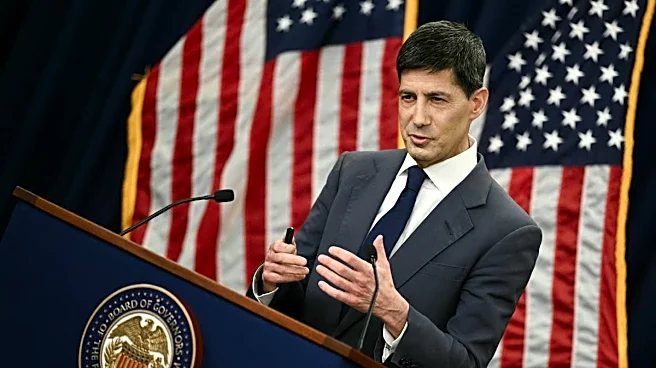
The Federal Reserve has indicated a potential interest rate hike by September, as short-term U.S. interest-rate futures now reflect a higher likelihood of this action. This shift in market expectations follows the Fed's decision to maintain the current
policy rate within the 3.50%-3.75% range. However, nearly half of the Federal Open Market Committee (FOMC) members have projected at least one rate increase by the end of 2026 to address rising inflation. This development has led traders to adjust their forecasts, anticipating a rate hike as a measure to combat inflationary pressures.
Why It's Important?
The potential rate hike by the Federal Reserve is significant as it reflects the central bank's response to ongoing inflation concerns. An increase in interest rates can help curb inflation by making borrowing more expensive, thereby slowing down economic activity. However, it also poses risks to economic growth and investment prices. Businesses and consumers may face higher borrowing costs, impacting spending and investment decisions. The anticipation of a rate hike has already influenced market behavior, with traders adjusting their positions in response to the Fed's projections.
What's Next?
If the Federal Reserve proceeds with a rate hike, it could lead to further adjustments in financial markets as investors reassess their strategies. Businesses and consumers may need to prepare for higher borrowing costs, which could affect spending and investment plans. Additionally, the Fed's future communications and policy decisions will be closely monitored by market participants for further indications of its approach to managing inflation and economic growth.