








What's Happening?
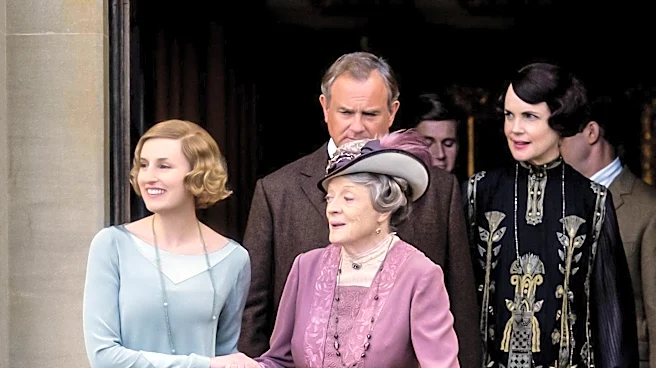
Highclere Castle, a Jacobethan country house located south of Newbury in Hampshire, England, is widely recognized as the primary filming location for the popular period drama 'Downton Abbey'. The estate's history dates back to 749, when an Anglo-Saxon
king granted the land to the Bishops of Winchester. Over centuries, it transitioned into private ownership, eventually becoming associated with the Earls of Carnarvon. The current architectural style of the castle is largely due to a 19th-century remodeling by architect Sir Charles Barry, known for his work on the Houses of Parliament. Beyond its cinematic fame, Highclere Castle has significant historical depth, including its connection to the 5th Earl of Carnarvon's involvement in the 1922 discovery of Tutankhamun's tomb. The castle also served as a hospital during the First World War and housed evacuated children during the Second World War, showcasing its enduring role in British history.
Why It's Important?
Highclere Castle's dual identity as a historical landmark and a global television icon highlights the significant impact of media on cultural heritage and tourism. Its association with 'Downton Abbey' has propelled it to international fame, drawing visitors and attention to its rich history, architecture, and the stories of the Carnarvon family. This global recognition not only boosts local tourism and the British heritage sector but also demonstrates how popular culture can preserve and promote historical sites. The castle's history, including its role in the discovery of Tutankhamun's tomb and its wartime contributions, provides a tangible link to pivotal moments in history, offering educational value and a deeper understanding of past eras. The commercial success of products like Highclere Castle Gin, which leverages the castle's brand and botanicals, further illustrates the economic benefits derived from such cultural landmarks.
What's Next?
Highclere Castle is expected to continue its role as a prominent tourist attraction, drawing fans of 'Downton Abbey' and history enthusiasts alike. The ongoing interest in the series and the castle's historical significance will likely ensure a steady stream of visitors. The castle will also continue to host exhibitions, such as the one dedicated to the discovery of Tutankhamun's tomb, further enriching the visitor experience. Its continued presence in popular culture, potentially through future 'Downton Abbey' productions or related media, will maintain its international profile. The success of associated ventures, like Highclere Castle Gin, suggests a potential for further brand extensions that capitalize on the castle's aristocratic image and historical narrative.
Beyond the Headlines
The enduring popularity of Highclere Castle, largely fueled by 'Downton Abbey', underscores a broader societal fascination with aristocratic life and historical narratives. This phenomenon raises questions about the romanticization of the past and how media portrayals shape public perception of historical periods and social structures. The castle's transformation from a private residence with a long history into a global cultural icon also highlights the evolving nature of heritage preservation and its intersection with commercial interests. The blend of historical authenticity and fictional storytelling creates a unique cultural product that resonates with audiences worldwide, offering both escapism and a connection to a bygone era. This trend suggests a growing appetite for immersive historical experiences, whether through television, tourism, or related merchandise.