




What's Happening?
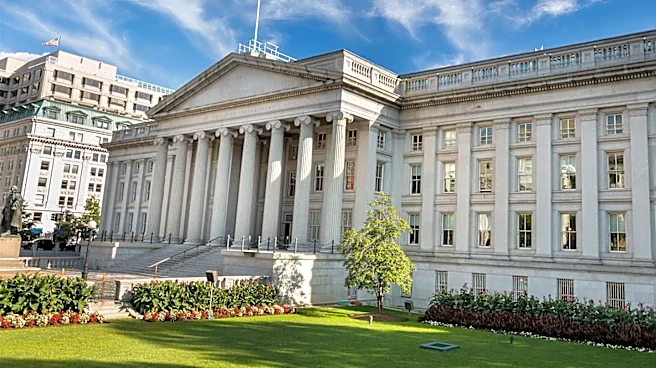
On November 4, the U.S. Department of the Treasury’s Office of Foreign Assets Control (OFAC) issued Venezuela-related General License (GL) 5AA. This license authorizes transactions, financing, and other dealings related to the Petróleos de Venezuela,
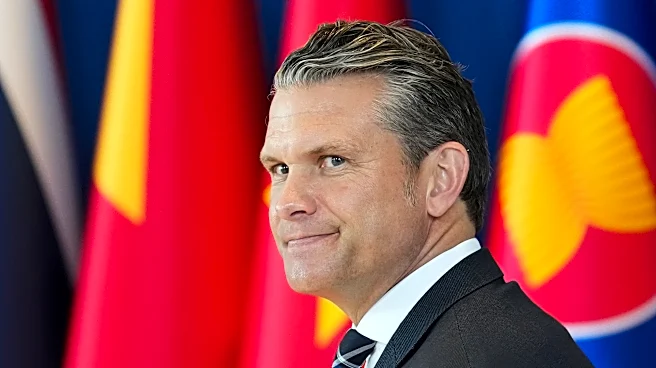
S.A. (PdVSA) 2020 8.5 percent bond, effective on or after December 18, 2026. This new license replaces and supersedes GL 5Z, which was set to take effect on November 5, effectively extending the delay for these transactions. The authorization specifically addresses dealings that would otherwise be prohibited by subsection 1(a)(iii) of Executive Order (E.O.) 13835, as amended. This development follows a meeting on November 2 between Treasury Secretary Bessent and Venezuelan Foreign Minister Oliver Blanco, where Secretary Bessent reportedly emphasized U.S. support for 'reconnecting the Venezuelan financial sector.'
Why It's Important?
This extension of the authorization delay for the PdVSA 2020 bond transactions is significant for several reasons. It indicates a continued cautious approach by the U.S. government regarding financial dealings with Venezuela, despite recent diplomatic engagements. The PdVSA 2020 bond is a critical financial instrument, and its status has broad implications for investors, creditors, and the Venezuelan economy. The delay suggests that the U.S. is maintaining leverage or seeking further conditions before fully opening up certain financial avenues. Secretary Bessent's statement about 'reconnecting the Venezuelan financial sector' suggests a long-term goal of financial normalization, but the bond delay indicates that this process is gradual and conditional. This decision impacts the valuation of Venezuelan debt, the confidence of international investors, and the overall financial stability of Venezuela, which heavily relies on its oil sector.
What's Next?
The immediate consequence is that transactions related to the PdVSA 2020 bond will remain restricted until December 18, 2026. This gives stakeholders, including bondholders and financial institutions, additional time to prepare for the eventual authorization or to adjust their strategies based on the continued delay. Future actions from OFAC will be closely watched for any further extensions or modifications to this authorization. The U.S. Treasury Department may continue to engage in diplomatic discussions with Venezuelan officials to assess conditions for broader financial sector reconnection. The decision could also influence other U.S. sanctions policies towards Venezuela, potentially signaling a phased approach to easing restrictions based on political or economic developments within the country. Market participants will be monitoring for any further guidance or announcements from OFAC regarding Venezuelan financial assets.
Beyond the Headlines
The repeated extensions of the PdVSA bond authorization delay highlight the intricate relationship between U.S. sanctions policy, geopolitical objectives, and the economic realities of Venezuela. This ongoing deferral reflects a broader strategy where financial tools are used as leverage to influence political outcomes or to signal dissatisfaction with certain actions. The bond, backed by a significant stake in Citgo, a U.S.-based refining company, represents a complex legal and financial challenge. The delay also underscores the challenges faced by investors holding distressed Venezuelan debt, as the political and sanctions landscape directly impacts their ability to recover assets. Furthermore, the U.S. emphasis on 'reconnecting the Venezuelan financial sector' suggests a long-term vision that aims to stabilize the country's economy, potentially as a precursor to broader political changes. This approach reflects the multifaceted nature of U.S. foreign policy, where economic pressure and diplomatic engagement are often intertwined to achieve strategic goals.