







What's Happening?
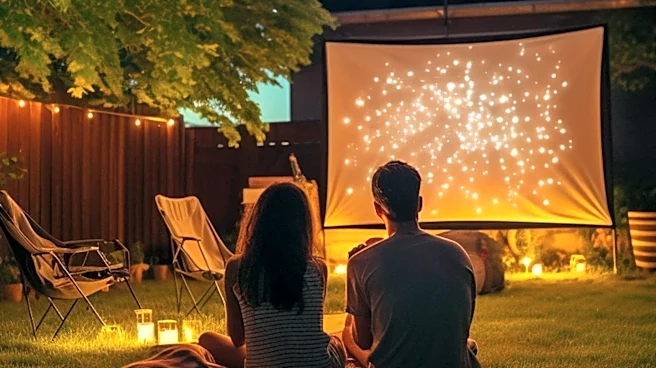
The choice between projectors and outdoor TVs for backyard entertainment is a key consideration for homeowners looking to enhance their outdoor living spaces. Projectors offer a larger viewing area and flexibility, suitable for both indoor and outdoor use,
and can be easily stored when not in use. They are particularly well-suited for nighttime movie watching and hosting larger groups. However, proper sizing, lumens, and foot-lamberts are crucial for an enjoyable experience. Outdoor TVs, conversely, are better for brighter viewing conditions, limited spaces, or as a permanent fixture. They typically come with louder built-in speakers and are simpler to set up for sports or cable viewing. While outdoor TVs can be more expensive than projectors, they often involve fewer additional setup costs. The decision ultimately hinges on specific viewing habits, budget, and the desired permanence of the outdoor screen.
Why It's Important?
This comparison is important for consumers investing in outdoor entertainment technology, as it guides them toward a solution that best fits their lifestyle and budget. The growing trend of enhancing outdoor living spaces means more homeowners are seeking ways to extend their indoor entertainment options to their backyards. Understanding the distinct advantages and disadvantages of projectors versus outdoor TVs can prevent costly mistakes and ensure satisfaction. For instance, families prioritizing large-scale movie nights under the stars might find projectors more appealing due to their immersive experience and portability. Conversely, those who want to watch sports during the day or desire a more permanent, weather-resistant setup might lean towards an outdoor TV. This decision impacts not only the viewing experience but also the overall functionality and aesthetic of an outdoor living area, influencing how homeowners relax and entertain outdoors.
What's Next?
As technology continues to advance, consumers can expect further innovations in both outdoor projector and TV markets. Manufacturers will likely focus on improving brightness and durability for projectors, making them more viable in varied lighting conditions, while outdoor TVs may see advancements in screen technology to reduce glare and enhance picture quality in direct sunlight. The integration of smart features and connectivity options will also continue to evolve, offering more seamless streaming and content access for both device types. Retailers will likely expand their offerings, providing more specialized outdoor entertainment packages that combine these devices with sound systems and weather-resistant enclosures. Homeowners will need to stay informed about these developments to make the most suitable choices for their evolving outdoor entertainment needs.
Beyond the Headlines
The increasing sophistication of outdoor entertainment technology reflects a broader cultural shift towards integrating indoor comforts with outdoor living. This trend extends beyond simple movie nights, influencing architectural design and landscape planning to create comprehensive outdoor living rooms. The choice between a projector and an outdoor TV can also signify different approaches to leisure and social interaction. A projector, often used for communal movie nights, fosters a more event-driven, shared experience, while an outdoor TV might cater to more casual, everyday viewing, akin to an indoor living room. This evolution in outdoor living spaces highlights a desire for greater flexibility and personalization in how people utilize their homes, blurring the lines between indoor and outdoor environments and enhancing the overall quality of life.