





What's Happening?
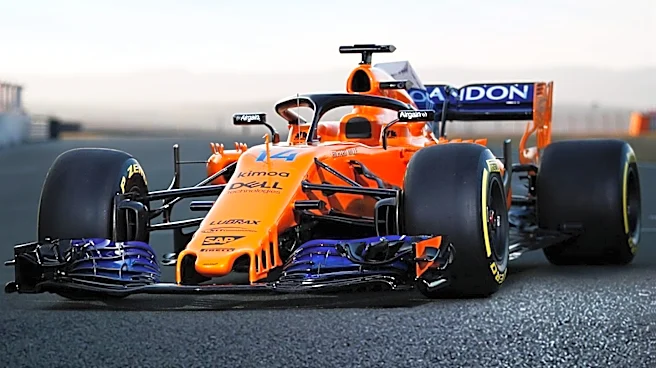
McLaren Group Limited, the parent company of McLaren Racing, has completed a major ownership restructuring following a series of deals in 2024 and 2025. Bahraini sovereign wealth fund Mumtalakat now holds 75% of McLaren Group Limited, with the remaining
25% owned by the Abu Dhabi government’s CYVN Holdings. This restructuring has simplified the group's ownership structure. Notably, the road-car division, McLaren Automotive, is now entirely separate, with CYVN Holdings owning 100% of McLaren Group Holdings, which controls McLaren Automotive. The restructuring also involved buying out financial investors who provided a rescue package during the Covid pandemic. These investors, including MSP, Ares, O’Connor, and Caspian, invested in the F1 business at a $750 million valuation in 2020 and exited at $4.5 billion, achieving an annual return of approximately 45%. The company's accounts also reveal a McLaren Heritage Collection of 203 cars at the end of 2025, with five cars from this collection slated for private sale. McLaren Automotive's deliveries saw a significant decline, with full-year deliveries down by a third to 2,000 cars, and first-quarter deliveries dropping by nearly 40% to 483 units.
Why It's Important?
This ownership restructuring and the substantial return on investment for financial backers underscore the increasing valuation of Formula 1 teams and the broader motorsport industry. The $4.5 billion exit valuation for investors highlights the significant financial appeal of high-profile sports entities, attracting substantial capital from sovereign wealth funds and other major investors. The separation of McLaren Racing and McLaren Automotive into distinct ownership structures suggests a strategic move to optimize the performance and financial health of each entity independently. While McLaren Racing appears to be a high-value asset, the decline in McLaren Automotive's road-car deliveries indicates challenges in the luxury automotive market or a deliberate strategy to adjust production to demand. This divergence in performance between the racing and road-car divisions could influence future investment decisions and strategic directions for both entities, potentially leading to different growth trajectories and market positioning.
What's Next?
The simplified ownership structure is expected to provide greater clarity and stability for McLaren Group Limited and its racing operations. The continued high valuations of F1 teams suggest ongoing investor interest and potential for further growth in the motorsport sector. For McLaren Automotive, now under separate ownership by CYVN Holdings, the focus will likely be on resetting production to match demand and potentially exploring new market strategies to address the decline in deliveries. The announced private sale of five cars from the McLaren Heritage Collection could generate additional capital and further highlight the value of McLaren's historical assets. Future financial reports will provide more insights into the performance of both the racing and automotive divisions under their new structures, indicating whether the strategic separation leads to improved financial outcomes for each.
Beyond the Headlines
The significant financial returns for investors in McLaren Racing reflect a broader trend of increasing commercialization and profitability within elite sports, particularly Formula 1. This trend raises questions about the balance between sporting integrity and commercial interests, as well as the accessibility and affordability of such high-value assets. The strategic decision to separate the racing and road-car businesses could be a blueprint for other diversified luxury brands, allowing each division to pursue specialized strategies without being constrained by the performance of the other. The challenges faced by McLaren Automotive in road-car deliveries, despite the brand's prestige, highlight the competitive and evolving landscape of the luxury automotive market, where factors like economic conditions, consumer preferences, and technological shifts can significantly impact sales. The preservation and monetization of the McLaren Heritage Collection also underscore the growing value of automotive history and collectibles as alternative investment assets.