







What's Happening?
Andy Jassy, CEO of Amazon, has expressed strong confidence in Amazon Web Services (AWS), envisioning it as a potential trillion-dollar annual revenue business with robust free cash flow and return on invested capital. This projection comes as Amazon commits
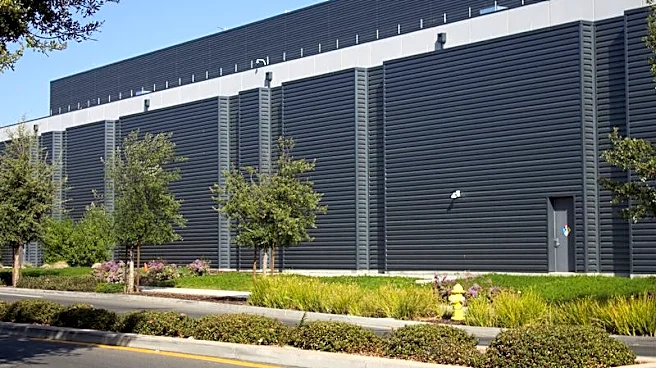
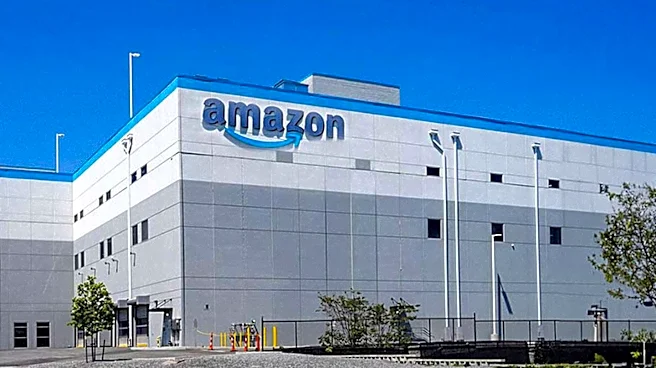
approximately $200 billion in capital expenditures for 2026, emphasizing that current spending is crucial for generating future free cash flow. Jassy highlighted the ongoing expansion of AI data centers, noting their reliance on companies often overlooked by investors. He also mentioned that AWS revenue increased by 37% to $42.23 billion, marking its fastest growth in 18 quarters. Jassy articulated a 'flywheel' effect where growth in AI drives the core business, with agent workloads predominantly running on regular CPUs, thereby boosting AWS’s core cloud services. This strategic focus on infrastructure and AI capacity underscores Amazon's long-term vision for AWS.
Why It's Important?
This strategic direction is significant for the U.S. business landscape, particularly in the technology and cloud computing sectors. AWS's potential to become a trillion-dollar business would solidify Amazon's dominance in cloud infrastructure, impacting competitors and fostering innovation in AI. The substantial capital expenditure commitment of $200 billion for 2026 signals a massive investment in U.S. infrastructure, creating jobs and stimulating economic activity in communities hosting data centers. This investment also highlights the escalating demand for AI-related computing power, driving growth for suppliers of hardware, power, cooling, and connectivity solutions. The 'flywheel' effect described by Jassy suggests that advancements in AI will continue to fuel the core cloud services, benefiting businesses that rely on AWS for their operations. Furthermore, Amazon's focus on raw infrastructure scale, as opposed to Microsoft's software-centric AI approach, indicates a divergence in strategies among tech giants, potentially leading to different market outcomes and competitive dynamics.
What's Next?
In the immediate future, observers will be closely monitoring Amazon's Q3 net sales guidance, which is projected to be between $197 billion and $202 billion, to assess the company's overall performance. A key area of focus will be whether Jassy decides to sell Trainium chips, Amazon's custom AI accelerators, outside of AWS, which could further expand its influence in the AI hardware market. The company's ability to manage its significant capital expenditures, which reached $54.2 billion in Q2 and resulted in negative trailing free cash flow of $7.6 billion, will be critical. The long-term success of AWS in achieving its trillion-dollar revenue goal will depend on its continued ability to meet the rapidly growing demand for AI workloads and maintain its competitive edge in cloud infrastructure. Additionally, the impact of Amazon's $1 billion investment over five years in U.S. data center communities, aimed at job training, education, and infrastructure, will be watched for its effectiveness in easing local resistance and securing necessary capacity for AI expansion.
Beyond the Headlines
Beyond the immediate financial metrics, Amazon's aggressive investment in AI infrastructure raises broader implications for the future of work and technological dependency. The emphasis on AI agents and their potential to operate at a different cadence than human workers suggests a fundamental shift in how tasks are performed and managed within organizations. This could lead to a re-evaluation of traditional work structures and the potential for 'bullshit jobs' to be either eliminated or, paradoxically, created by AI if not managed thoughtfully. The challenge, as highlighted by Jassy, involves reimagining not only customer experiences but also internal organizational processes, which can be a difficult 'change management' obstacle. The long-term shift towards AI-driven operations could also intensify the debate around the ethical and societal impacts of advanced AI, including data privacy, algorithmic bias, and the concentration of technological power. The substantial capital required for this expansion also underscores the increasing financial barriers to entry in the high-stakes AI and cloud computing arena.