






What's Happening?
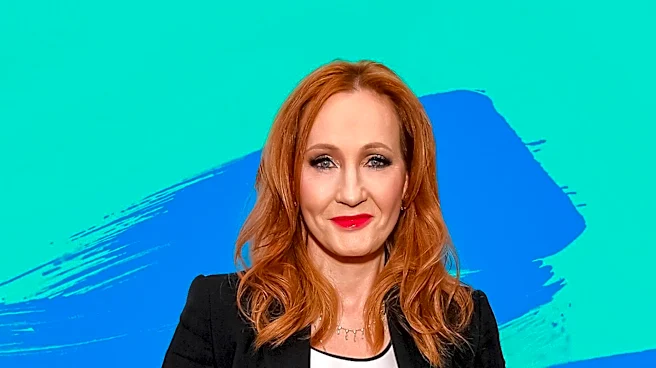
J.K. Rowling's agent, Neil Blair, has issued a statement to Entertainment Weekly refuting claims made by filmmaker Lilly Wachowski. Wachowski accused Rowling of funding anti-trans legislation globally and compared her to Nazis. Blair clarified that Rowling's contributions,
made through The J.K. Rowling Women's Fund, are directed towards protecting existing legal rights for women in the UK under the Equality Act 2010. He emphasized that the fund supports women taking legal action to preserve sex-based rights in areas such as workplaces, sports, and single-sex spaces, particularly those who have faced job loss, income loss, or discrimination for their belief that biological sex is unchangeable. Blair explicitly stated that Rowling does not support legal actions aimed at harming transgender people or limiting trans rights. The controversy stems from an interview where Wachowski called for a boycott of Rowling's projects, asserting that supporting her work contributes to 'trans genocide.'
Why It's Important?
This clarification is important as it addresses a significant public controversy surrounding a prominent author and her philanthropic efforts. The accusations of 'funding trans genocide' are severe and have the potential to impact public perception of J.K. Rowling and her work, including the 'Harry Potter' franchise and upcoming HBO series. The debate highlights the ongoing tension and differing interpretations of women's rights and transgender rights, particularly concerning the Equality Act 2010 in the UK. The statement from Rowling's representative aims to frame her actions as supportive of women's existing legal protections rather than as an attack on transgender individuals. This dispute could influence consumer behavior, particularly among fans and activists, and may lead to further discussions about the responsibilities of public figures in advocating for social causes.
What's Next?
The statement from J.K. Rowling's representative is likely to fuel further discussion and debate among various stakeholders, including LGBTQ+ advocates, women's rights groups, and the general public. Filmmaker Lilly Wachowski and her supporters may respond to this clarification, potentially reiterating their concerns or offering counter-arguments. The ongoing public discourse could impact the reception of Rowling's future projects, such as the HBO series based on her work. Organizations and individuals who receive funding from The J.K. Rowling Women's Fund may face increased scrutiny or become subjects of public debate. The situation also underscores the broader challenge of navigating complex social issues in the public sphere, where differing interpretations of rights and protections can lead to significant conflict and accusations.
Beyond the Headlines
Beyond the immediate accusations and clarifications, this event touches upon deeper societal discussions regarding freedom of speech, the interpretation of legal frameworks like the Equality Act 2010, and the evolving understanding of gender identity and sex-based rights. The comparison of Rowling to Nazis by Wachowski raises questions about the boundaries of public discourse and the use of extreme rhetoric in social debates. It also highlights the ethical considerations for public figures when engaging in advocacy and the potential for their actions to be interpreted in vastly different ways. The controversy reflects a broader cultural struggle to reconcile differing perspectives on identity, rights, and social justice, particularly in the context of legal and political activism. The incident may also prompt a re-evaluation of how public figures' personal views and philanthropic activities intersect with their professional careers and public image.