




What's Happening?
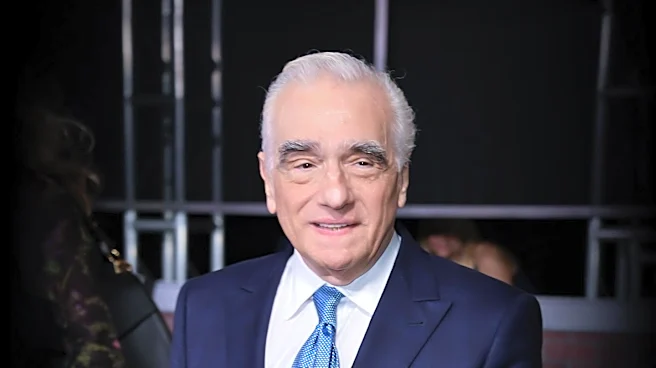
Internationally celebrated filmmaker Martin Scorsese is exploring the use of generative artificial intelligence (AI) in filmmaking, particularly for pre-production. In June 2026, Scorsese joined German AI company Black Forest Labs as an adviser to investigate
how visual AI tools could support the creative process. He demonstrated how Black Forest Labs’ FLUX technology could help communicate cinematic ideas more efficiently, serving as an additional creative tool for production teams. This interest in AI aligns with his past experimentation with visual effects and digital filmmaking in projects like 'Hugo' and 'The Irishman'. Despite his engagement with emerging technology, there is no established public record of a major business venture, filmmaking partnership, or close personal relationship between Martin Scorsese and Marc Benioff, the co-founder and CEO of Salesforce. Their professional achievements and career paths remain distinct, with Benioff focused on enterprise technology and Scorsese on cinematic storytelling.
Why It's Important?
Scorsese's embrace of AI highlights a significant trend in the entertainment industry: the integration of advanced technology into creative fields. His involvement with Black Forest Labs could legitimize AI as a valuable tool for filmmakers, potentially influencing other directors and production companies to explore similar applications. This development could lead to new efficiencies in pre-production, allowing for more precise visualization and communication of artistic concepts, which could impact project timelines and budgets. For the technology sector, particularly AI developers, a high-profile endorsement from a renowned filmmaker like Scorsese could accelerate adoption and investment in creative AI solutions. While Scorsese views AI as a tool to enhance human creativity rather than replace it, this move could spark broader discussions about the role of AI in artistic endeavors and the future of creative professions. The clear distinction between Scorsese's and Benioff's careers also underscores that while technology permeates various industries, direct collaborations between leaders in vastly different fields are not always present, even when both are innovators.
What's Next?
The partnership between Martin Scorsese and Black Forest Labs is likely to continue exploring and refining AI applications for filmmaking. Future developments may include the integration of FLUX technology into more mainstream production workflows, potentially leading to new industry standards for visual communication during pre-production. Other filmmakers and studios will likely observe Scorsese's experience, which could either encourage wider adoption of AI tools or prompt further debate about their ethical and artistic implications. As AI technology advances, there may be increased investment in developing specialized AI tools tailored for various aspects of film production, from scriptwriting assistance to post-production effects. The ongoing dialogue about AI's role in creative industries will also evolve, with a focus on how these tools can augment human talent rather than diminish it. This could lead to new educational programs and training for filmmakers to effectively utilize AI in their craft.
Beyond the Headlines
Scorsese's foray into AI touches upon deeper implications regarding the evolving definition of creativity and authorship in the digital age. His perspective, viewing AI as a tool to aid communication and visualization, suggests a future where technology serves as an extension of the artist's intent rather than a replacement for it. This raises questions about intellectual property in AI-generated content and the potential for new forms of artistic expression that blend human vision with algorithmic capabilities. Furthermore, it highlights the ongoing challenge for traditional industries, like filmmaking, to adapt to rapid technological advancements while preserving their core artistic values. The distinction between Scorsese's creative innovation and Benioff's business innovation also underscores the diverse ways individuals can drive progress, whether through artistic vision or technological disruption. This development could also influence how film education incorporates new technologies, preparing future generations of filmmakers for an AI-integrated production landscape.