




What's Happening?
Federal regulators have seized and shut down United Fidelity Bank, citing that the institution was at risk of being unable to meet depositor demands. This action marks the largest U.S. bank failure by assets since 2024. The Office of the Comptroller of the Currency,
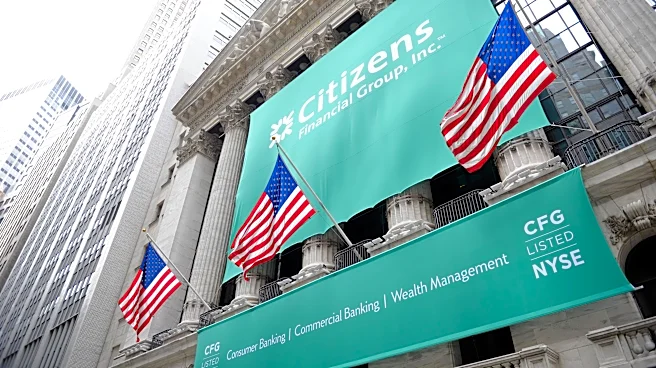
a division of the U.S. Treasury, declared the bank to be in an 'unsafe or unsound condition to transact business.' As of the end of September, United Fidelity Bank held approximately $5.9 billion in total assets and $5.4 billion in total deposits. The Federal Deposit Insurance Corporation (FDIC) announced that First Citizens Bank will acquire all of United Fidelity's deposits and assets. The 22 branches of the now-closed bank, located across Indiana, Illinois, Florida, Colorado, and the U.S. Virgin Islands, are scheduled to reopen as First Citizens branches by Monday, with customer accounts automatically transferred. The FDIC has assured that all deposits are safe and insured up to $250,000.
Why It's Important?
The seizure of United Fidelity Bank underscores ongoing vulnerabilities within the U.S. banking sector, even after recent periods of instability. This event highlights the critical role of federal regulatory bodies like the FDIC and the Office of the Comptroller of the Currency in maintaining financial stability and protecting depositors. The cost of this failure to the FDIC's Deposit Insurance Fund is estimated at $1.83 billion, which is financed by other banks. This cost could potentially lead to increased assessments on healthy banks, indirectly affecting their profitability or lending practices. For customers of United Fidelity Bank, the seamless transition of accounts to First Citizens Bank aims to minimize disruption and maintain confidence in the banking system. However, the failure of a bank of this size can prompt broader scrutiny of regional banks' balance sheets and risk management practices, potentially leading to tighter regulatory oversight across the industry.
What's Next?
The immediate next step involves the reopening of United Fidelity Bank's 22 branches under the First Citizens Bank brand by Monday, ensuring a smooth transition for customers. Account transfers will be automatic, and customers will likely receive communications from First Citizens Bank regarding their new accounts and services. Regulators will continue to monitor the banking sector for any signs of contagion or systemic risk following this failure. The FDIC will proceed with the resolution process, managing the assets and liabilities of the failed bank. For First Citizens Bank, the acquisition represents an expansion of its footprint and customer base, and the integration of new operations will be a key focus. The broader banking industry may face increased scrutiny from investors and regulators, potentially leading to a re-evaluation of risk exposures and capital adequacy, especially among regional banks of similar size.
Beyond the Headlines
This bank failure, while significant in size, also brings to light the continuous challenges faced by financial institutions in a dynamic economic environment. Beyond the immediate financial implications, such events can erode public trust in smaller, regional banks, potentially driving customers towards larger, 'too big to fail' institutions. This consolidation trend could reduce competition and limit banking options for communities served by smaller banks. Furthermore, the $1.83 billion cost to the Deposit Insurance Fund, while absorbed by the industry, serves as a reminder of the collective responsibility banks bear in maintaining the stability of the financial system. It also prompts questions about the effectiveness of early intervention mechanisms and stress tests designed to prevent such failures, suggesting that underlying issues might persist despite regulatory frameworks.