




What's Happening?
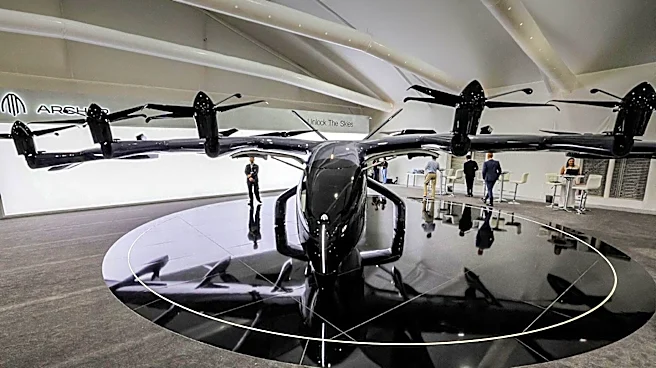
Archer Aviation, a U.S. electric vertical takeoff and landing (eVTOL) aircraft manufacturer, has signed an agreement with ITA Airways, Italy's flag carrier, to develop electric air taxi services in Italy. This partnership aims to establish air taxi routes,
initially connecting airports with city centers. Archer Aviation estimates that a flight between Rome Fiumicino Airport and central Rome could take under 10 minutes. This agreement marks Archer's first collaboration with a European airline, following previous deals in the U.S. and the UAE. The current agreement is a preliminary step, contingent on definitive agreements and conditions that have not yet been disclosed. No aircraft purchases have been announced, nor have specific cities beyond Rome been identified. UrbanV, a vertiport company, is involved in developing the necessary landing infrastructure in Rome, having already operated a test vertiport in the area. Regulatory approval from EASA (Europe) and ENAC (Italy) is required before any commercial passenger service can commence, as Archer's Midnight aircraft is not yet certified for passenger transport in either the U.S. or Europe.
Why It's Important?
This collaboration signifies a significant step in the global expansion of urban air mobility (UAM) and highlights the growing interest in eVTOL technology for commercial transportation. For Archer Aviation, securing a partnership with a major European airline like ITA Airways could open doors to the broader European market, enhancing its position in the competitive eVTOL industry. For Italy, the introduction of air taxi services could revolutionize inter-city travel, offering a faster alternative to traditional ground transportation, particularly for airport transfers. This could alleviate traffic congestion and reduce travel times, potentially boosting tourism and business efficiency. The involvement of UrbanV in vertiport development underscores the critical need for integrated infrastructure to support UAM operations. The success of this preliminary agreement could influence other airlines and cities to explore similar partnerships, accelerating the adoption of eVTOL technology worldwide and creating new economic opportunities in aerospace manufacturing, urban planning, and transportation services.
What's Next?
The immediate next steps involve Archer Aviation and ITA Airways working towards signing definitive, binding agreements, which will outline specific aircraft orders, operational details, and timelines. Regulatory bodies, ENAC in Italy and EASA in Europe, will need to grant certification for Archer's Midnight aircraft to carry passengers commercially. This certification process is crucial and can be extensive. Concurrently, UrbanV will continue its efforts in developing and establishing vertiport infrastructure in Rome and potentially other Italian cities. The partners will also need to determine pricing structures for these air taxi services, which are expected to be positioned as a premium travel option initially. Public acceptance and integration into existing transportation networks will also be key factors. Future developments will likely include test flights, further regulatory approvals, and the establishment of operational protocols before any passenger service can be launched.
Beyond the Headlines
The development of air taxi services in Italy, spearheaded by Archer Aviation and ITA Airways, extends beyond mere transportation innovation. It touches upon broader themes of urban planning, environmental sustainability, and regulatory evolution. The successful implementation of eVTOL services could lead to a re-evaluation of urban infrastructure, potentially necessitating new zoning laws and air traffic management systems to accommodate low-altitude air travel. Environmentally, if powered by renewable energy, these electric air taxis could contribute to reducing carbon emissions from transportation, aligning with global climate goals. However, the energy demands for charging these aircraft and the overall lifecycle environmental impact will require careful assessment. Legally and ethically, questions surrounding air traffic control in urban environments, noise pollution, privacy concerns related to aerial surveillance, and safety standards for novel aircraft will need to be addressed. This initiative could also spur further research and development in battery technology, autonomous flight systems, and advanced manufacturing, creating a ripple effect across various technological sectors.