






What's Happening?
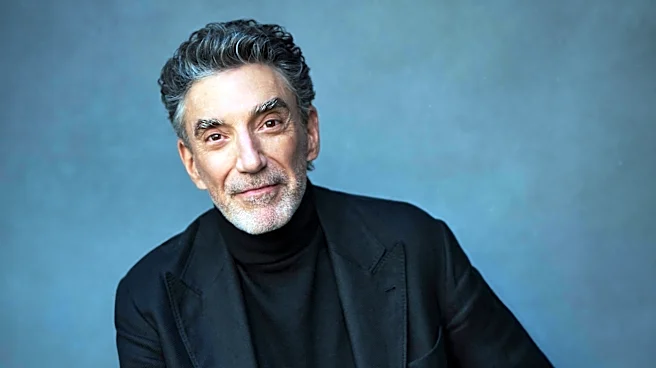
Chuck Lorre, a prolific television producer and writer, revealed in his new memoir, 'Sitcom,' that he faced significant pushback from studio executives regarding casting decisions for his popular shows. Specifically, Lorre had to advocate strongly for Jon
Cryer to be cast in 'Two and a Half Men.' Executives initially did not want Cryer in the role. This was a recurring theme in Lorre's career, as he also encountered resistance when casting Kunal Nayyar in 'The Big Bang Theory' and Melissa McCarthy in 'Mike & Molly.' In the case of 'Mike & Molly,' a female executive even suggested casting a 'more attractive actress' and putting her in a 'fat suit' instead of McCarthy, who was deemed a 'comic genius' by Lorre's casting director. Lorre's memoir details these behind-the-scenes struggles, highlighting his commitment to his casting choices despite executive opposition.
Why It's Important?
This revelation underscores the often-hidden power dynamics and creative clashes within the television industry. It highlights how executive preferences, sometimes driven by superficial considerations like appearance rather than talent, can influence casting decisions. Lorre's persistence in fighting for actors like Jon Cryer and Melissa McCarthy ultimately led to successful and critically acclaimed performances, suggesting that creative vision, when championed, can overcome corporate resistance. This dynamic impacts not only the careers of actors but also the quality and authenticity of the content delivered to audiences. The memoir provides insight into the challenges show creators face in maintaining artistic integrity against commercial pressures, potentially influencing future discussions about creative control and diversity in casting within Hollywood.
What's Next?
The release of Chuck Lorre's memoir is likely to spark further discussions within the entertainment industry about casting practices and executive influence. It may encourage other show creators to share their experiences with similar battles, potentially leading to a more transparent dialogue about how decisions are made behind the scenes. For actors like Jon Cryer and Melissa McCarthy, this memoir serves as a public acknowledgment of the initial skepticism they faced and the eventual vindication of their talent. The insights provided could also inform aspiring writers and producers about the realities of navigating studio politics, emphasizing the importance of conviction in their creative choices. It might also prompt a re-evaluation of the criteria used by executives in approving talent, potentially shifting focus more towards artistic merit.
Beyond the Headlines
The deeper implications of Lorre's revelations touch upon the broader issue of representation and body image in media. The suggestion to put an actress in a 'fat suit' instead of casting Melissa McCarthy, who was deemed suitable for the role, reflects a pervasive industry bias towards certain physical ideals. This incident highlights the pressure on female actors to conform to narrow beauty standards, even when a role explicitly calls for a different body type. Lorre's fight for McCarthy, and her subsequent success, serves as a powerful counter-narrative, demonstrating that talent and comedic genius can transcend these superficial expectations. This ongoing tension between artistic integrity and commercialized beauty standards continues to shape the landscape of television and film, influencing societal perceptions of appearance and worth.