






What's Happening?
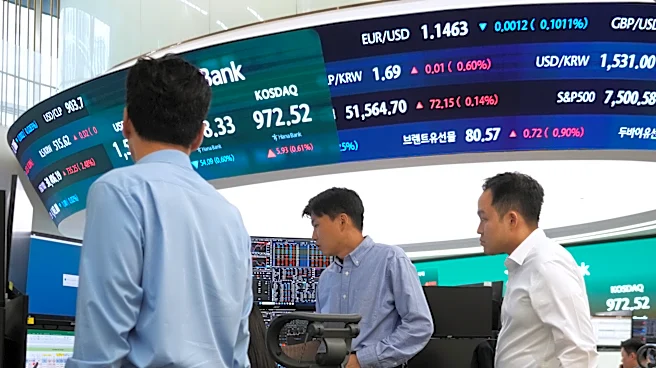
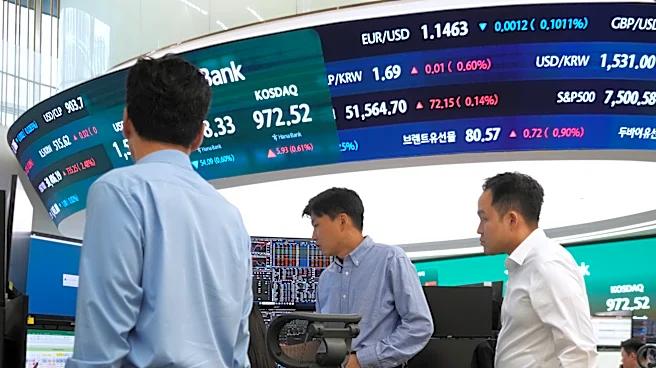
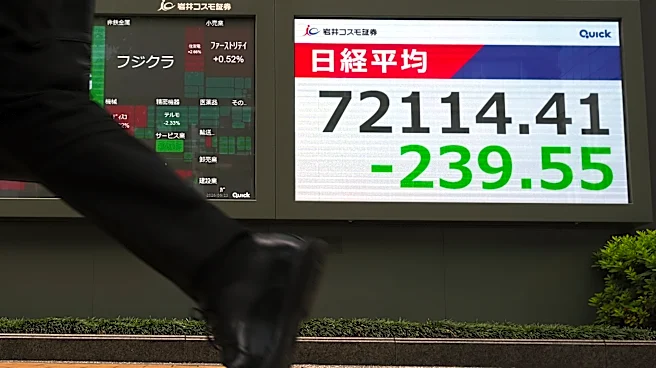
South Korea's KOSPI index experienced a significant decline, dropping nearly 10% due to a global selloff in technology stocks. This downturn was triggered by profit-taking from foreign investors and concerns over the overheated rally in the chip sector.
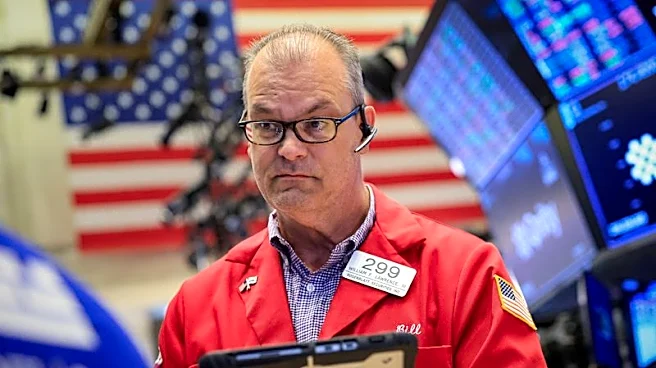
The KOSPI's fall was its largest single-day decline in over three months, with major tech companies like Samsung Electronics and SK Hynix seeing substantial losses. The selloff followed a similar trend in the U.S., where major indexes also opened in the red. The semiconductor sector, which had seen a significant run-up, bore the brunt of the selling pressure. Analysts suggest that investors are rotating into more defensive market areas, less focused on artificial intelligence, and offering more predictable cash flows.
Why It's Important?
The sharp decline in South Korea's KOSPI highlights the volatility and risks associated with the global tech sector, particularly in markets heavily invested in artificial intelligence and semiconductor stocks. This selloff could signal a broader market correction, affecting investor confidence and potentially leading to a reevaluation of tech stock valuations. The impact is significant for U.S. markets as well, as the tech sector is a major component of the economy. Companies and investors heavily invested in AI and semiconductor industries may face financial challenges, while those in more stable sectors could see increased interest. The situation underscores the interconnectedness of global markets and the potential for rapid shifts in investment strategies.
What's Next?
Market analysts will be closely watching for signs of stabilization or further declines in tech stocks. Investors may continue to shift their focus to more stable sectors, potentially leading to a broader market realignment. The response from retail investors, particularly in the U.S., will be crucial in determining whether this selloff is a temporary dip or the start of a longer-term trend. Additionally, companies in the semiconductor sector may need to reassess their growth strategies and investor communications to address concerns about overvaluation and market saturation.