





What's Happening?
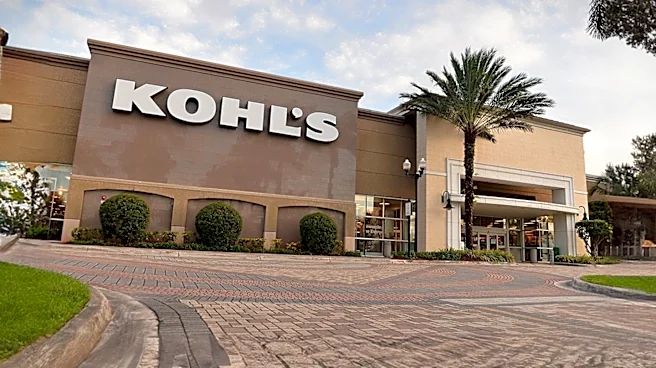
Kohl's Corporation has seen a 3.1% year-over-year decrease in its share of U.S. big-box and department store visits. This decline places Kohl's at the 12th position out of 14 brands measured in the category, indicating a significant loss of market share.
The data, collected from deterministic opt-in device visits across approximately 74.6 million U.S. households, compares store visits from the second half of 2024 to the second half of 2025. The methodology ensures that the change reflects actual visitation patterns by using same-store comparisons and outlier trimming, controlling for factors like seasonality and panel growth. This metric is category-relative, meaning it assesses Kohl's performance against its direct competitors within the big-box and department store sector. The findings suggest that Kohl's is struggling to attract customers compared to many of its rivals, with only two other brands performing worse in terms of foot traffic share.
Why It's Important?
This decline in foot traffic is a critical indicator for Kohl's, signaling potential challenges in its retail strategy and competitive positioning. A sustained decrease in physical store visits can directly impact sales revenue, profitability, and overall market valuation. For the broader U.S. retail industry, Kohl's performance reflects ongoing shifts in consumer shopping habits, including the increasing preference for online shopping or a gravitation towards other discount retailers that have shown growth. Competitors like Ross Dress for Less, T.J. Maxx, and Marshalls, which experienced significant increases in foot traffic, are likely capturing market share from traditional department stores like Kohl's. This trend could lead to strategic re-evaluations within Kohl's, potentially involving store closures, changes in merchandise, or increased investment in e-commerce to counteract the decline in physical visits. Investors and stakeholders will closely monitor these trends as they can influence future business decisions and financial outlooks for the company.
What's Next?
In response to the declining foot traffic, Kohl's may implement various strategies to revitalize its in-store experience and attract more customers. This could include enhancing its omnichannel capabilities, investing in store remodels, or introducing new product lines and partnerships to differentiate itself from competitors. The company might also explore more aggressive promotional activities or loyalty programs to incentivize visits. Given the success of off-price retailers, Kohl's could also adjust its pricing strategies or merchandise mix to better compete in the current retail landscape. The upcoming financial reports will likely provide further insights into how this foot traffic decline has impacted sales and profitability, and what specific measures the company plans to take. Industry analysts will be watching to see if Kohl's can reverse this negative trend and regain market share in a highly competitive retail environment.
Beyond the Headlines
The persistent decline in foot traffic for Kohl's highlights a broader transformation within the U.S. retail sector, where traditional department stores are facing existential challenges. This trend is not merely about individual store performance but reflects deeper shifts in consumer behavior, driven by factors such as the convenience of e-commerce, the rise of fast-fashion, and evolving consumer preferences for value and experience. The struggle of Kohl's underscores the need for legacy retailers to innovate rapidly and adapt to these changes, or risk becoming obsolete. This situation also raises questions about the future of physical retail spaces in suburban malls and shopping centers, many of which rely on anchor tenants like Kohl's to draw in customers. The long-term implications could include further consolidation in the department store sector, increased vacancies in retail real estate, and a continued shift towards a more diversified retail ecosystem that blends online and offline experiences.